How Long Does a Home Battery Backup Last in Texas?

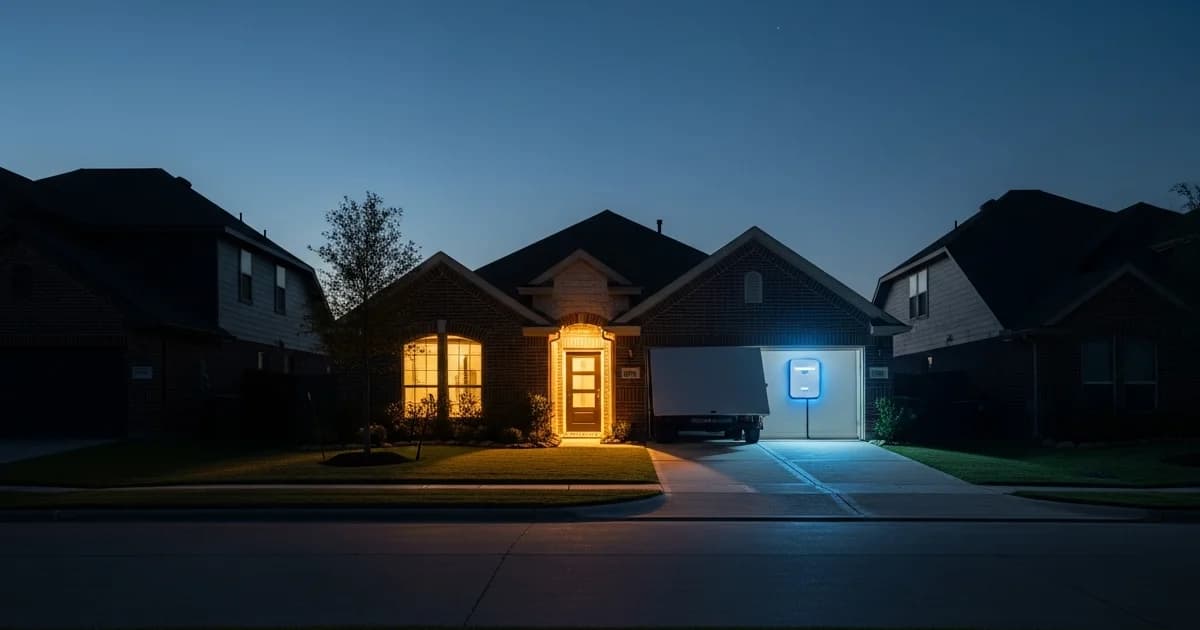
In July 2024, Hurricane Beryl knocked out power to 2.2 million CenterPoint customers in the Houston area. Some neighborhoods waited more than 10 days for restoration (Texas Tribune, 2024). If you searched for "how long does a home battery last" after that storm, you found articles built around national averages that don't reflect what Texas homeowners actually experience.
This guide answers two separate questions that often get conflated. First: how many hours will a battery keep your home running during an outage? Second: how many years will the battery itself last before it needs replacement? Both answers depend on factors that are specific to Texas, including load size, heat, chemistry, and installation location.
Key Takeaways
- A 13.5 kWh home battery powers essential loads for 8-24 hours during a Texas outage. Add central AC and that drops to 4-6 hours.
- Hurricane Beryl left some Houston homes dark for 10 days, far beyond what a single battery unit can cover without solar recharging.
- Texas summer heat above 45°C (113°F) can cut LFP battery cycle life by up to 50% without proper shaded installation (WattCycle, 2024).
- Quality LFP batteries last 15-20 years and 6,000-10,000 charge cycles before capacity noticeably drops (Solar Insure, 2025).
How Long Will a Home Battery Run During a Texas Power Outage?
A 13.5 kWh home battery can power essential loads, a refrigerator, lights, phone charging, and a router, for roughly 8-24 hours during an outage, according to Good Faith Energy. Run central air conditioning at the same time and that window drops to 4-6 hours. The range is wide because runtime depends almost entirely on what you plug in.
The math is straightforward. Divide your battery's usable capacity (in kWh) by your load (in kilowatts), and you get hours. A refrigerator draws about 150 watts. LED lights for a few rooms add another 100-200 watts. That totals roughly 350-500 watts, or 0.35-0.5 kW. At that draw, a 13.5 kWh battery lasts 27-38 hours. Add a single 750-watt window AC unit and you're now drawing 1.1-1.25 kW total, which cuts runtime to about 10-12 hours.
Central air conditioning is a different situation. A 2.5 kW central system running continuously pushes total draw to around 3 kW. That brings a 13.5 kWh battery down to roughly 4-5 hours. A larger 5 kW whole-home load, running multiple appliances simultaneously, drains the same battery in 2-3 hours.
Texas homes average 36 kWh per day, 24% above the U.S. national average of about 30 kWh per day (EIA, 2024). National sizing guides consistently understate what a Texas homeowner actually needs. A 10 kWh battery that "covers 24 hours of essentials" per a California-based article will cover about 18 hours in a typical Houston home.
Why Texas Outages Last Longer Than the National Average
The U.S. average power outage in 2024 was 11 hours, nearly double the prior decade's average, with 80% of those hours caused by major weather events including Beryl, Helene, and Milton (EIA, 2025). For Houston homeowners, 11 hours isn't the benchmark. Ten days is.
According to Whisker Labs data cited by Governing in 2024, Houston registers the most power outages of any city in the U.S. by direct measurement. Texas logged 263 major outage events from 2019 to 2023, more than any other state. The average Texas outage affected 172,000 customers at a time.
Why is Texas so vulnerable? ERCOT operates as an isolated grid, with minimal connections to neighboring states. When demand spikes or a storm knocks out generation, there's less ability to import power from elsewhere. CenterPoint Energy's distribution infrastructure in Houston has faced years of criticism for slow restoration times. Hurricane season runs from June through November, and the peak months, August and September, coincide with the hottest days of the year. Storm damage plus extreme heat demand is a rough combination.
The chart below puts the scale difference in context. Routine Texas outages often resolve in a few hours. But Beryl wasn't routine, and neither will the next major hurricane be.
For more on the ERCOT grid's structural vulnerabilities, see
.Does Texas Heat Reduce How Long a Battery Lasts?
Yes, and the effect is more significant than most installers will tell you upfront. Every 10°C rise above a battery's optimal operating range of 20-25°C can reduce lithium battery cycle life by up to 50% (WattCycle, 2024). Texas regularly hits 45°C (113°F) in summer. An improperly placed battery, mounted on a south-facing exterior wall with no shade, could lose half its expected lifespan compared to the same unit installed in a shaded, ventilated garage.
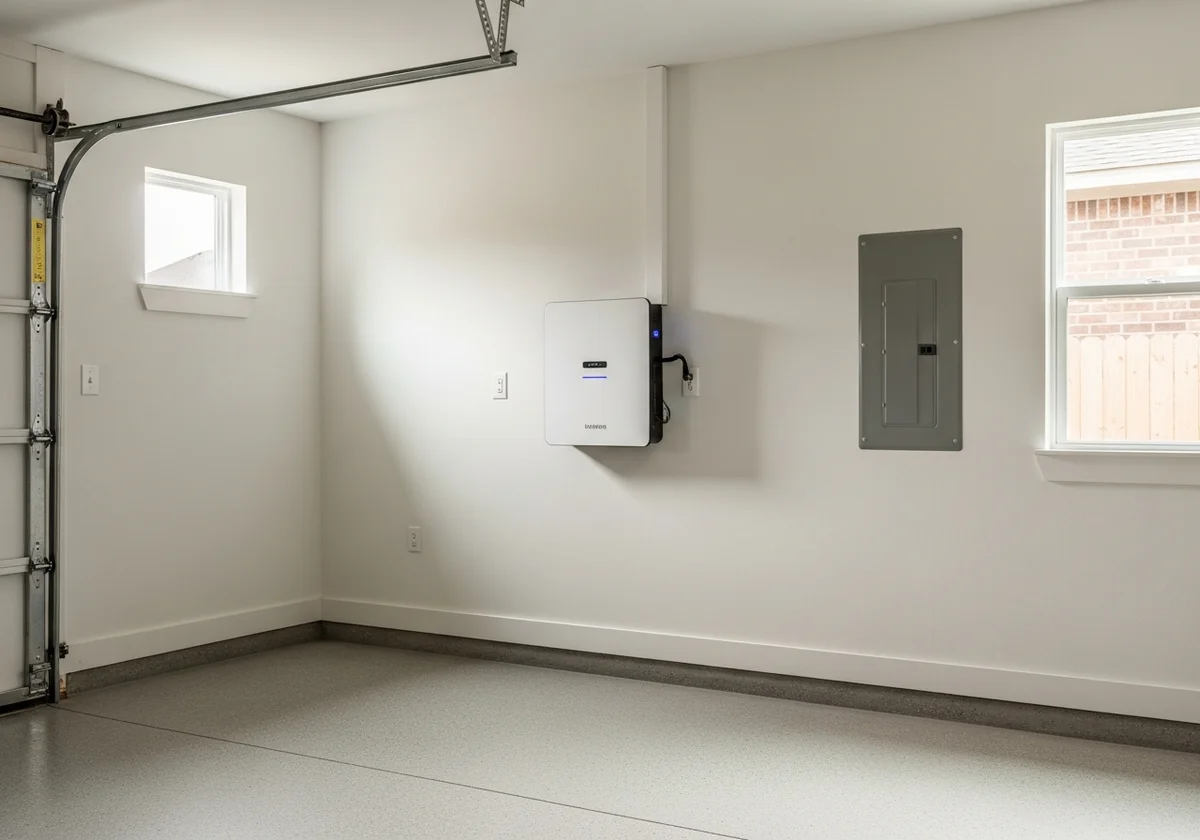
Here's where battery chemistry matters. LFP (lithium iron phosphate) handles high temperatures better than NMC (nickel manganese cobalt) chemistry. LFP loses roughly 20-30% of cycle life in extreme heat. NMC loses 40-50%. Both are penalized by Texas summers, but LFP is the more durable choice for Gulf Coast installations specifically. Most modern residential batteries, including the Tesla Powerwall 3 and the Enphase IQ 5P, use LFP chemistry.
What can you actually do about the heat? Three things:
Install in a shaded, ventilated space. A north-facing garage wall or interior utility room keeps ambient temperature 15-20°F lower than a south-facing exterior wall in August. That difference translates directly to longer battery life.
Avoid south-facing exterior walls in Texas. Direct afternoon sun on a black battery enclosure can push surface temperatures well above ambient. Most manufacturers spec an operating range that tops out at 50°C (122°F), which is uncomfortably close to what a sun-baked wall delivers.
Ask your installer about thermal management. Some battery systems include active cooling. Others rely entirely on passive airflow. In a Texas climate, active management is worth the extra cost if the unit won't be in a climate-controlled space.
How Long Does a Home Battery Last Before It Needs Replacing?
LFP home batteries last 15-20 years and 6,000-10,000 charge cycles before capacity drops to 70-80% of original, according to a Solar Insure study published in March 2025 that analyzed real-world degradation data. After the initial stabilization period, the annual failure rate for LFP cells drops well below 1% per year. That's a fundamentally different durability profile than what homeowners experienced with earlier lead-acid backup systems.
One cycle is one full charge plus one full discharge. If your battery charges from solar each day and discharges each evening, that's roughly 365 cycles per year. At 6,000-10,000 total cycles, the battery should perform well for 16-27 years. Most homeowners won't cycle it daily, which stretches the calendar lifespan further.
Manufacturer warranties give you a floor to stand on. Tesla Powerwall carries a 10-year warranty guaranteeing 70% capacity retention. Enphase IQ 5P warrants 60% capacity at 15 years. These aren't the end of useful life, just the minimum performance the manufacturer will stand behind. In practice, well-installed LFP batteries in climate-controlled conditions routinely outperform their warranty terms.
The table below puts the three common residential battery chemistries in context.
LFP batteries last 6,000-10,000 charge cycles and 15-20 years before capacity drops to 70-80% of original, with real-world annual failure rates well below 1% after initial stabilization (Solar Insure, March 2025). For Texas homeowners, that lifespan assumes proper shaded installation. Sustained operation at 45°C cuts those projections roughly in half.
How Much Battery Storage Do Texas Homes Actually Need?
For essential loads only, with no AC, 10-14 kWh of storage covers roughly 24 hours in a Texas home. Add a single window AC unit and you'll want 20-24 kWh for an overnight run. For central air and multi-day coverage, two battery units is the realistic minimum for most Houston-area homes.
Here's where national guides fail Texas homeowners. Most battery sizing articles use 900-1,000 kWh per month as a baseline, roughly the national average. Texas homes average 1,096 kWh per month, and that climbs to approximately 1,400 kWh per month during summer (EIA, 2024). At 46 kWh per day in peak summer, a battery system sized on national assumptions won't deliver what a Texas homeowner expects.
The sizing formula is simple: take your daily essential load in kWh, divide by your battery's usable depth of discharge (typically 80-90%), and that's your minimum battery size. If you want to run a 750-watt window AC unit for 8 hours overnight plus basic essentials, you're looking at about 7.5 kWh for the AC alone, plus 3-5 kWh for everything else, totaling 10-12 kWh for one night. For safety margin, most installers recommend 20-25% additional headroom. That puts you at 13-15 kWh, which is why a single 13.5 kWh battery works for one-night coverage with modest AC use.
For multi-day coverage, or for a home that needs central AC to remain livable during a summer outage, the math changes. Two 13.5 kWh units give you 27 kWh of usable storage. Pair them with a solar array that can recharge 15-20 kWh per day, and you have a system that can sustain essential loads indefinitely, including through a storm that lasts a week.
What Affects Runtime Most During a Texas Outage?
Five variables determine how long your battery actually runs when the grid goes down. In order of impact:
1. Battery capacity installed (kWh). This is the ceiling. Every other variable works within the total energy you have stored. A 13.5 kWh battery cannot run central AC for a day regardless of other settings.
2. Connected loads, especially AC. Air conditioning is the single largest variable in a Texas home. Switching from central AC (2.5-5 kW) to a window unit (750W) can triple your runtime from the same battery.
3. State of charge at the moment of outage. A battery that's 60% charged when the grid fails delivers 60% of its rated capacity. If you live in a storm zone, keeping your battery topped off during hurricane watches is worth the habit.
4. Ambient temperature. Heat increases draw on the battery management system and can reduce real-world usable capacity by 5-10% on the hottest Texas days. A 13.5 kWh battery in a 110°F garage behaves more like 12.5 kWh in practice.
5. Depth of discharge setting. Most installers configure residential batteries to discharge to 10-20% reserve, leaving a buffer for the system to restart safely. A system set to 80% usable capacity gives you more runtime than one set to 70%.
Frequently Asked Questions
How long does a Powerwall last during a Texas power outage?
A single Tesla Powerwall (13.5 kWh) powers essential loads for roughly 12-24 hours without AC, or 4-6 hours with central air conditioning running. Most Houston-area homes need two Powerwall units for meaningful storm coverage. Tesla warrants the Powerwall for 10 years at 70% retained capacity.
Can a home battery last a whole week during an outage?
Not on its own. Covering 7 days of essential loads without AC would require roughly 250 kWh of storage, far beyond what a standard residential install provides. Multi-day coverage is realistic only when a solar array recharges the battery during daylight hours each day. A properly sized solar-plus-battery system can sustain essential loads indefinitely through extended outages.
Does Texas heat shorten home battery life?
Yes. Sustained temperatures above 45°C (113°F) can reduce LFP battery cycle life by up to 50% compared to installation in a temperate climate (WattCycle, 2024). Proper shaded, ventilated installation in a garage or interior utility room significantly reduces this risk. LFP chemistry handles high heat better than NMC, making it the preferred choice for Texas installations.
How often do I need to replace a home battery?
Quality LFP batteries are warranted for 10-15 years and realistically last 15-20 years before capacity drops to a level that affects daily usefulness. The battery doesn't stop working at warranty expiration. It simply holds a smaller percentage of its original charge. Most homeowners won't need a full replacement for 15-20 years with proper installation.
What is the difference between battery runtime and battery lifespan?
Runtime is how many hours the battery powers your home during a single outage. Lifespan is how many years the physical battery unit remains useful before degrading enough to warrant replacement. A battery can have excellent long-term lifespan (15-20 years) but limited runtime (8 hours) if it's undersized for the loads connected. Both matter, and they require separate planning decisions.
What This Means for Houston Homeowners
Here's what the data actually says, without the national framing.
- Runtime depends almost entirely on whether AC is running: 8-24 hours without it, 4-6 hours with central air on a single 13.5 kWh unit
- Houston outages aren't 11 hours. Beryl was 10 days. Plan for multi-day events, not multi-hour ones
- Texas summer heat cuts battery lifespan in half if the unit isn't properly placed. Shaded installation isn't optional here
- LFP chemistry is the right choice for Texas, and most modern residential batteries already use it
- Most Houston homes need 20+ kWh of storage (two units) for meaningful hurricane season coverage
- Pairing battery storage with solar is the only way to cover outages longer than one to two days
A single battery won't solve a 10-day outage. But it will keep your refrigerator running, your phones charged, your medical devices powered, and your home livable through the storms that actually happen most years. That's the honest case for battery backup in Texas.