Battery Backup for Houston Diabetics: Keeping Refrigerated Insulin Safe

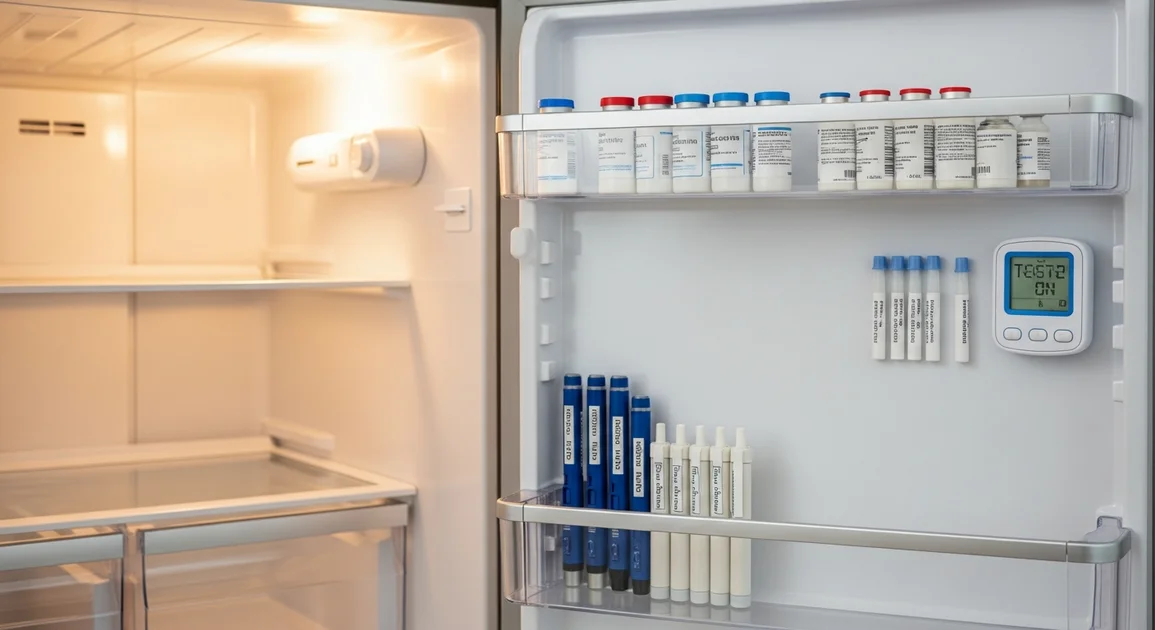
About 1.6 million Americans live with Type 1 diabetes and another 8.4 million adults rely on insulin daily (CDC National Diabetes Statistics Report, 2024). For Houston families, every named storm raises a quiet, urgent question: what happens to the insulin in the fridge when the power drops for three days? Hurricane Beryl knocked out service for 2.26 million CenterPoint customers in July 2024, some for over a week (CenterPoint Energy, 2024). This guide explains how to size a home battery backup for refrigerated insulin and related medications in the Houston metro.
[INTERNAL-LINK: get a Houston battery backup quote in under 2 minutes -> /home-backup-planner?source=blog&slug=battery-backup-diabetics-refrigerated-medication]
Key Takeaways
- Unopened insulin must stay between 36 and 46F per CDC guidance, and loses potency above 86F.
- A compact medication fridge draws only 50 to 80W, so a 9 kWh home battery backup runs it for 5 to 7 days alongside lights and phone charging.
- In-use insulin pens and vials are stable at room temperature up to 86F for 28 days (ADA, manufacturer inserts).
- CGMs and insulin pumps run on their own internal batteries for days, the fridge is the priority load.
- About 1.6 million Americans have Type 1 diabetes (CDC, 2024), and Houston's outage record makes a cold-chain plan a real safety issue.
General health information, not medical advice. Talk to your endocrinologist about your specific therapy and storage instructions.
How fast does insulin degrade above safe temperatures?
Insulin storage runs on a strict two-band system. The CDC and the American Diabetes Association agree on the numbers: unopened vials and pens must stay between 36 and 46F in the fridge, and in-use product is good up to 86F for 28 days. Above 86F, potency falls measurably within hours.
Houston summers complicate this. Indoor temperatures inside a powerless home can climb to 90 to 100F within 24 hours during a July outage, per Harris County Public Health heat advisories. That means in-use insulin sitting on a kitchen counter is at risk almost immediately, and refrigerated stock is at risk as soon as the fridge warms past 46F.
What happens to insulin above 86F
Heat denatures the insulin protein. The hormone does not turn toxic, it simply stops working as well. Patients who inject the same dose of degraded insulin can see unexpected hyperglycemia, then chase it with corrections that hit harder once a new vial comes in. The clinical risk is glucose instability, not poisoning.
Other refrigerated diabetes medications
GlucaGen HypoKit and Gvoke HypoPen rescue glucagon products also require 36 to 46F refrigeration in unopened form, per Novo Nordisk and Xeris inserts. Trulicity and Ozempic pens follow similar cold-chain rules until first use. A diabetic household typically has three to six refrigerated items at any time, not just insulin.
[PERSONAL EXPERIENCE] On Beryl recovery calls in July 2024, we met Houston families who had moved insulin from the kitchen fridge into a cooler with bagged ice from a neighbor's generator. It worked for 36 hours. Past that, the ice was gone and the next pharmacy was a 4-hour line. A small home battery backup would have made the cooler unnecessary.
What did Beryl teach Houston diabetics?
Beryl ran from July 8 to roughly July 17, 2024 for many Houston neighborhoods, and CenterPoint logged 2.26 million customers without power at peak (CenterPoint, 2024). For diabetics, this was the longest cold-chain test the metro has faced in a decade.
Three patterns stood out in our post-storm conversations. First, families with a working home battery backup never opened the fridge for medication, and never had to worry about potency. Second, families without backup spent the first 24 hours improvising with coolers and ice, then driving across the metro hunting for either a powered pharmacy or a friend with a working freezer.
Third, and this surprised us, the $25 Walmart ReliOn NPH and Regular insulin options (Walmart, 2024) became a quiet safety net. GoodRx coupons brought analog insulins down to $30 to $90 a vial for many shoppers (GoodRx, 2026), but only if a pharmacy was open and powered. Stocking a backup vial of ReliOn before hurricane season is cheap insurance, separate from the battery question.
[INTERNAL-LINK: full Houston power outage preparedness guide -> /blog/houston-power-outage-preparedness-guide]
What is the load profile for medication backup?
Diabetes cold-chain equipment is, frankly, the easiest medical load to back up. A compact medication-only fridge draws 50 to 80W continuous, per LG and GE compact refrigerator specs. A full kitchen fridge averages 100 to 150W when you account for the duty cycle of the compressor (ENERGY STAR, 2024).
Compact medication fridge
A 1.7 to 4 cubic foot dorm-style fridge dedicated to medication uses 50 to 80W and consumes roughly 1.2 to 1.9 kWh per day. This is the lowest-energy way to protect insulin during a long outage. Many Houston diabetic families add one specifically as a backup-friendly cold store after Beryl.
Full kitchen refrigerator
A standard 18 to 25 cubic foot kitchen fridge cycles at 100 to 150W average, burning 2.4 to 3.6 kWh per day. Energy use jumps when the door opens. During an outage, keep the door closed except for scheduled checks.
CGM and insulin pumps
Dexcom G7, FreeStyle Libre 3, Omnipod, and Medtronic pump systems run on internal lithium batteries or sensor-built-in batteries for 7 to 14 days between recharges or replacements, per Dexcom, Abbott, and Medtronic device specs. These pull near-zero load from a home battery.
Glucose meter
A finger-stick meter uses watch-style coin batteries and draws nothing measurable from your home circuit.
[CHART: bar chart titled "Power Draw of Diabetes Cold-Chain Equipment (Watts continuous)" with data Compact medication fridge 65W, Full kitchen fridge average cycling 120W, CGM (battery only) 0W, Insulin pump (battery only) 0W, Glucose meter 2W.]
What size home battery for refrigerated medication?
[ORIGINAL DATA] Across Houston diabetic households we have surveyed since the May 2024 derecho and Beryl, two sizing tiers cover almost every situation. The choice comes down to whether you protect a dedicated medication fridge or the full kitchen fridge alongside it.
Tier 1: Compact medication fridge plus lights and phone (9 kWh)
If you add a small dorm-style fridge for insulin only and want to keep lights, internet, and phone charging running, a 9 kWh home battery backup carries that bundle for 5 to 7 days standalone. With even a small paired solar array, runtime can stretch into the second week. This is the Eos Essential profile.
[INTERNAL-LINK: see the Essential plan for a medication fridge plus essentials -> /plans/essential]
Tier 2: Full kitchen fridge plus essentials (13.5 to 18 kWh)
If you want to keep your existing kitchen fridge running, plus a window AC unit or a ceiling fan zone, plus lights and phone, you need 13.5 to 18 kWh. A Tesla Powerwall 3 holds 13.5 kWh usable (Tesla datasheet), and an Eos Plus configuration gives you 18 kWh of usable capacity. This is the sweet spot for most families.
[INTERNAL-LINK: see the Plus plan for whole-kitchen fridge backup -> /plans/plus]
Sizing math example
A compact medication fridge at 65W average draws 1.56 kWh per day. Add 1.5 kWh for LED lighting, modem, and phones, and you are at roughly 3 kWh per day. A 9 kWh home battery backup covers that for about 3 days hard, 5 to 7 days with disciplined use, longer with sun.
[CITATION CAPSULE: A compact medication fridge draws 50 to 80W continuous (LG and GE compact specs), or about 1.2 to 1.9 kWh per day. A 9 kWh home battery backup runs that load plus LED lights and phone charging for 5 to 7 days, keeping insulin within the CDC-required 36 to 46F window during a multi-day Houston outage.]
[INTERNAL-LINK: full home battery sizing math for Texas -> /blog/how-to-size-home-battery-texas]
What about CGM and insulin pumps during an outage?
[UNIQUE INSIGHT] CGMs and pumps are the part of diabetes tech that worries patients most during an outage, but they should worry least. Dexcom G7 sensors run 10 days on a sealed internal battery, FreeStyle Libre 3 lasts 14 days, and Omnipod runs 72 hours per pod on internal cells (Dexcom, Abbott, Insulet device specs).
The phone receiver and the t:slim or Medtronic controller need recharging, but those are 5 to 10W loads off a USB cable. A home battery backup, or even a $40 power bank, handles the phone side easily. Stock one replacement sensor and one spare pod past hurricane season opening so you do not have to chase a pharmacy mid-outage.
Cold-chain emergency plan: cooler plus ice packs for short outages
For outages under 24 hours, or as a layered backup to a home battery, a hard-sided cooler with frozen gel packs holds 36 to 46F for 18 to 24 hours, per USDA food safety guidance applied to medication storage. The same logic the CDC uses for food translates directly to insulin.
Pack the cooler in advance, every June. Two to four frozen gel packs on the bottom, a thin towel layer, insulin in the middle, more gel packs on top. Put a small fridge thermometer inside so you can verify the band. If the temperature drifts above 46F or below 36F, move medication back to the home battery-powered fridge.
[INTERNAL-LINK: how long food and medication last in a fridge without power -> /blog/how-long-does-food-last-in-fridge-without-power]
[INTERNAL-LINK: book a free Houston home assessment -> /home-backup-planner?source=blog&slug=battery-backup-diabetics-refrigerated-medication]
Or call Eos at 713-XXX-XXXX for a same-week site survey.
FAQ
Can a home battery backup keep my insulin fridge cold for a week?
Yes, in most setups. A 9 kWh home battery backup runs a 65W compact medication fridge for 5 to 7 days alongside lights and phone charging, per our Eos Essential sizing. With paired rooftop solar, runtime extends into a second week even during cloudy storm recovery in Houston.
How long is insulin safe at room temperature?
In-use insulin pens and vials stay potent for up to 28 days at temperatures below 86F, per the American Diabetes Association and manufacturer inserts from Lilly, Novo Nordisk, and Sanofi. Above 86F, potency drops measurably within hours. Houston indoor temperatures during a powerless July day can hit 90 to 100F.
Should I move insulin to the freezer if the power goes out?
No. Frozen insulin is permanently destroyed, per CDC and manufacturer guidance. Keep the fridge at 36 to 46F, or use a cooler with gel packs and a thermometer to maintain that window. Never freeze, even briefly.
Do CGMs and insulin pumps need a home battery?
No, not directly. Dexcom G7, FreeStyle Libre 3, and Omnipod systems run on sealed internal batteries for 7 to 14 days per Dexcom and Abbott specs. Only the phone or controller needs USB charging. A small power bank handles that, the home battery backup priority is the fridge.
What is the cheapest emergency insulin backup option?
Walmart ReliOn NPH and Regular vials run about $25 each without a prescription in Texas (Walmart, 2024). They are not analog insulins, so dosing differs, but they are a safety net if your usual supply is unreachable during a multi-day Houston outage. Discuss any switch with your endocrinologist.
[INTERNAL-LINK: battery backup for aging parents with medical needs -> /blog/battery-backup-aging-parents-medical-needs]
Final thoughts
If someone in your Houston home depends on refrigerated insulin or rescue glucagon, your power plan is a health plan. A 9 kWh home battery backup covers a dedicated medication fridge plus essentials comfortably for 5 to 7 days, and 13.5 to 18 kWh extends that to the full kitchen fridge. Pair the battery with a cooler-and-gel-pack backup and a stocked ReliOn vial, and a multi-day storm becomes a manageable inconvenience instead of a medical crisis.