ERCOT Grid Reliability: What Houston Homeowners Should Know

ERCOT Grid Reliability: What Houston Homeowners Should Know
In July 2024, Hurricane Beryl made landfall as a Category 1 storm and knocked out power to 2.2 million CenterPoint customers in the Houston area (CBS News, 2024). Eight days later, 88,000 customers were still in the dark. Beryl wasn't a historic storm. It was a relatively modest one that exposed how fragile the last mile of Houston's power delivery actually is.
Most coverage of Texas grid problems focuses on ERCOT, the state's grid operator, and the wholesale electricity system it manages. That story matters. But it's only half the picture for a Houston homeowner. Understanding the difference between ERCOT-level grid strain and CenterPoint's local distribution failures is the most useful thing you can learn about power reliability in this city.
This article translates the data into plain language: what ERCOT's reliability numbers actually mean, where real vulnerabilities remain, and what's in your control.
Key Takeaways
- ERCOT's summer 2026 reserve margin improved to 17.2% in the base-case forecast (ERCOT CDR, May 2025), up from 5.2% just months earlier, largely due to revised load forecasting rather than new infrastructure.
- Demand is growing faster than supply: ERCOT's large-load interconnection queue swelled from 63 GW to 226 GW in a single year (Latitude Media, 2025), driven by data centers and industrial expansion.
- Most Houston power outages are local CenterPoint distribution failures, not ERCOT grid emergencies. Battery backup protects against both.
- CenterPoint reduced customer outage minutes 45% in H1 2025 vs. H1 2024 (CenterPoint Energy, 2025).
What Is ERCOT, and Why Does It Affect Your Home?
ERCOT, the Electric Reliability Council of Texas, manages electricity flow to approximately 27 million Texans, including the entire Houston metro. It operates the Texas Interconnection, which is functionally isolated from the rest of the U.S. power grid. There are no interstate transmission lines capable of importing significant power from neighboring states during an emergency.
That isolation is the grid's defining risk. When supply falls short of demand in Ohio or California, neighboring states can share capacity. In Texas, the grid stands alone.
"Grid reliability" in plain terms means the buffer between total available power generation and total electricity demand at any given moment. When that buffer shrinks to near zero, ERCOT issues Conservation Appeals asking Texans to reduce consumption. When the buffer disappears entirely, rolling outages begin.
Here's what most ERCOT coverage misses: for Houston homeowners, the more common failure isn't an ERCOT grid emergency. It's a CenterPoint distribution failure. ERCOT manages bulk power generation and high-voltage transmission. CenterPoint owns and operates the local distribution lines that run power from substations to your home. Beryl didn't knock out power plants. It knocked down distribution poles. That's a CenterPoint problem, not an ERCOT problem, and it's the distinction that matters most for how you prepare.
How Reliable Is the Texas Grid Right Now?
ERCOT's summer 2026 reserve margin is currently forecast at 17.2% under the base-case scenario, a meaningful improvement over earlier projections (ERCOT Capacity, Demand and Reserves Report, May 2025). That number represents available generation capacity above peak demand. A 15% margin is roughly the industry standard for a grid this size.
But here's the part worth understanding: that 17.2% figure isn't mainly the result of new power plants coming online. It's largely the result of ERCOT revising its load forecasting methodology. The December 2024 CDR projected a summer 2026 reserve margin of only 5.2%, well below any comfortable threshold. The same grid, five months later, looks much healthier on paper because the forecast was updated. The underlying supply and demand math hasn't changed that dramatically.
ERCOT's own worst-case scenario still projects supply falling 6.2% short of peak summer demand in 2026. That scenario reflects extreme heat combined with higher-than-expected industrial and data center load. It's not the most likely outcome, but it's the one ERCOT itself puts in writing.
What Is Driving the Surge in Texas Electricity Demand?
Texas electricity demand is growing faster than any other grid in the United States, and the primary driver isn't households, it's data centers and industrial expansion (EIA, 2025). The U.S. Energy Information Administration projects ERCOT demand to grow 14% in 2026 alone, compared to low single digits for most other U.S. grids.
The scale of new load requests is striking. ERCOT's large-load interconnection queue, which tracks power requests from industrial and commercial customers wanting to connect to the grid, grew from 63 gigawatts one year ago to 226 gigawatts today (Latitude Media, 2025). Most of that demand comes from data centers and AI computing facilities, followed by hydrogen production projects and petrochemical expansion.
Why This Hits Houston Differently
Houston's petrochemical corridor already pulls substantial baseline industrial load around the clock. Unlike residential consumption, which peaks in the afternoon and drops overnight, industrial facilities run continuously. That compresses the grid's overnight recovery window and means summer heat amplifies demand on a system that's already running hard.
CenterPoint's service territory spans more than 5,000 square miles. The sheer size of the distribution network, combined with the density of older infrastructure in some Houston neighborhoods, makes local reliability more variable than regional grid statistics suggest.
What Has ERCOT Done Since Winter Storm Uri?
Winter Storm Uri in February 2021 left 4.5 million Texas households without power and contributed to the deaths of up to 702 people, with $80 billion to $130 billion in estimated economic damage (FERC Final Report, 2021; Federal Reserve Bank of Dallas, 2025). The response since then has been real, if uneven.
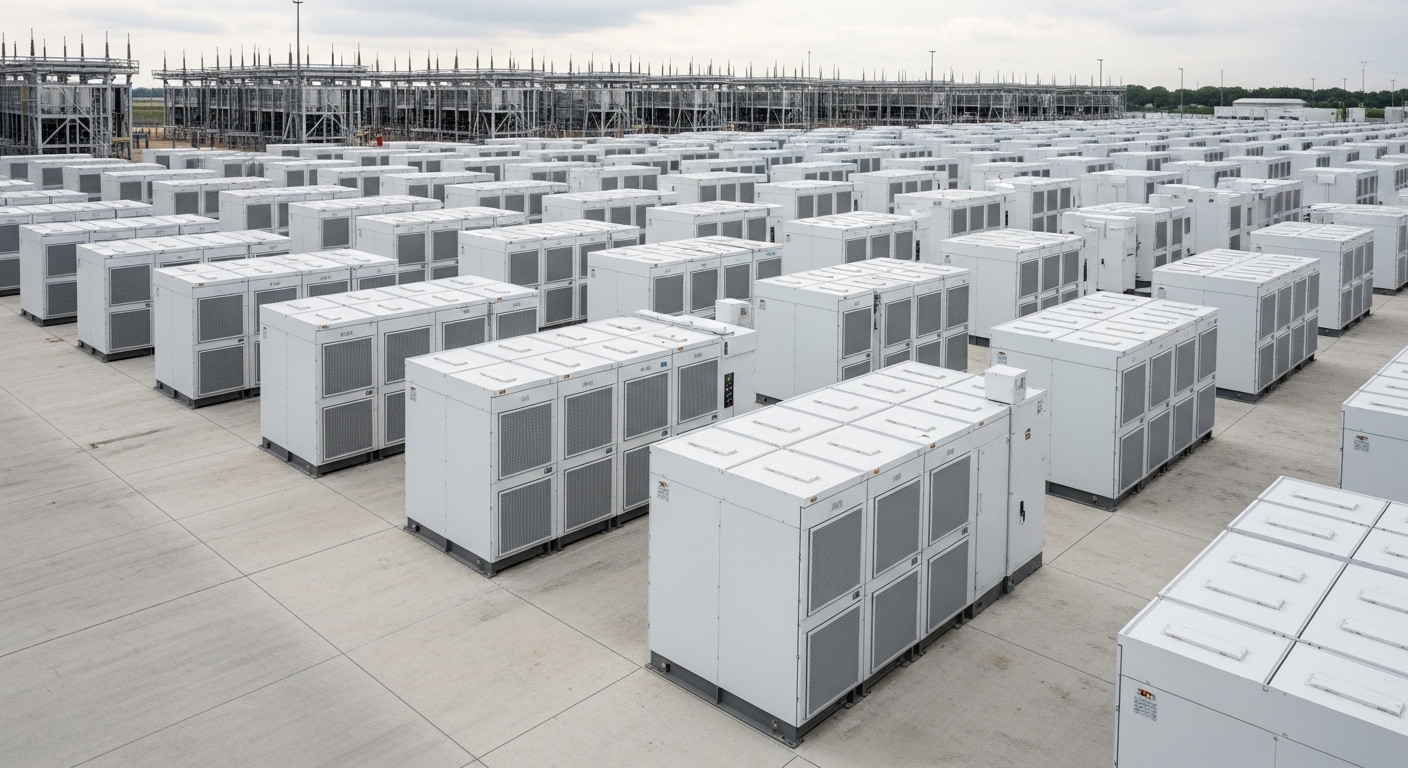
Senate Bill 3 mandated weatherization requirements for power generators. Texas approved a $33 billion, 765-kilovolt transmission backbone to improve high-voltage capacity statewide. ERCOT deployed real-time co-optimization (RTC) in 2025, a market mechanism designed to use available resources more efficiently. Battery storage capacity crossed 12,052 MW of rated power by Q3 2025, with 15 to 18 GW modeled for 2026 (Modo Energy, 2025).
What Critics Say Still Falls Short
Despite the progress, some structural vulnerabilities remain unchanged. The combined gas, coal, and nuclear generation capacity in ERCOT today is roughly flat compared to before Uri. Installed gas and coal capacity is actually down by 700 MW (Texas Policy Foundation, December 2025). The solar additions that look impressive in annual capacity reports produce near-zero output during winter peak demand hours, which occur before sunrise and after sunset.
Battery storage is real and growing, but it discharges in 2 to 4 hours. It smooths the afternoon peak and the overnight gap. It doesn't replace the steady thermal generation that keeps the lights on through an extended cold snap.
How Does Grid Stress Affect Your Electric Bill?
When ERCOT is under strain, wholesale electricity prices can spike sharply, and depending on your plan type, those costs can flow directly to you. Texas averages 15.69 cents per kilowatt-hour for residential electricity as of April 2026, slightly below the national average (EIA, 2026).
The Texas deregulated market means retail plans structure that exposure very differently. Fixed-rate plans lock your rate for a term, so a grid emergency in July doesn't change your August bill. Variable-rate plans update monthly based on wholesale market conditions. Indexed plans can expose customers to near-real-time pricing, which is where risk concentrates.
During an ERCOT grid emergency, the wholesale price cap is $5,000 per megawatt-hour, roughly 50 times the normal rate. That cap existed during Uri. Some variable-rate customers received electric bills in the thousands of dollars for a single week.
The lesson isn't that variable plans are always bad. It's that plan type, not just price, is the decision that matters most when the grid is stressed.
What Can Houston Homeowners Do About Grid Uncertainty?
You can't increase ERCOT's reserve margin or rebuild CenterPoint's distribution infrastructure. You can control how your home responds when either fails.
When Hurricane Beryl knocked out power across southeast Houston in July 2024, homes with battery backup systems kept the lights on, maintained air conditioning on essential circuits, and avoided the spoiled food and safety risks that turned a multi-day outage into a genuine hardship for many families. The storms aren't getting less frequent. The question is how exposed your home is when one arrives.
Why Battery Backup Addresses Both Failure Types
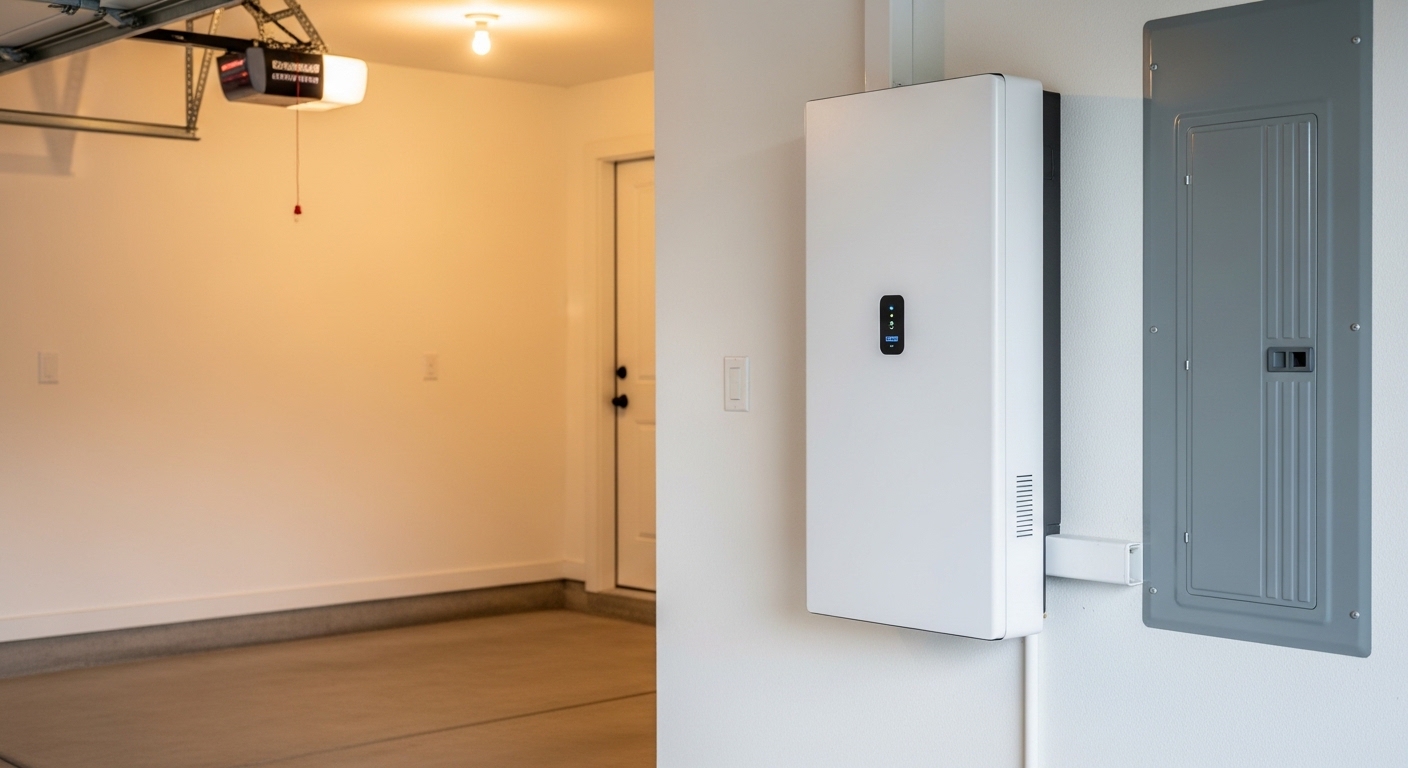
A home battery system operates independently of the grid. When your circuit breaker loses utility power, the battery switches automatically and supplies the loads connected to it. It doesn't matter whether the cause is a CenterPoint pole failure on your street or an ERCOT-wide Conservation Appeal. The battery doesn't know the difference, and neither will you.
Runtime depends on how many kilowatt-hours the battery holds and which loads you run. A 13 to 15 kWh system running essential circuits, lights, refrigerator, phone charging, and a few outlets typically lasts 12 to 20 hours. Adding central air conditioning drops that to 3 to 5 hours.
Simple Steps That Cost Nothing
Not ready to install a battery? These steps help in the meantime:
- Sign up for CenterPoint outage alerts via text or the CenterPoint app
- Bookmark ERCOT's live grid conditions dashboard at ercot.com/gridmktinfo/dashboards
- Pre-cool your home to 72 or 73 degrees before noon on Conservation Appeal days
- Keep vehicles and devices fully charged when NOAA heat advisories or freeze warnings are issued
Is the Texas Grid Getting Better or Worse?
Both, and that's not a diplomatic non-answer. The grid is measurably more resilient for typical weather events than it was before Uri. Weatherization mandates are in place. Battery storage has grown from roughly 800 MW in 2022 to more than 12 GW today. Real-time market optimization is live. ERCOT added 23 GW of new generation capacity between 2024 and 2025 (ERCOT 2025 State of the Grid, 2026).
The honest assessment is that demand is growing faster than the improvements are keeping up. Every ERCOT forecast cycle since 2023 has revised demand projections upward. The large-load queue is now nearly four times what it was a year ago. Texas is adding generation capacity at an unprecedented rate while also adding load at an unprecedented rate.
CenterPoint's local infrastructure improvements are real. The Greater Houston Resiliency Initiative, including 32,000 stronger poles and 400 miles of undergrounded lines, is delivering results. A 45% reduction in outage minutes is a meaningful improvement over the Beryl baseline.
The grid is better. The question is whether it's improving fast enough. For Houston homeowners making real decisions about resilience, the honest answer is: don't wait on the grid to solve it for you.
Frequently Asked Questions
Has the Texas grid been fixed since Winter Storm Uri?
Significant improvements have been made, including weatherization mandates under SB 3, a $33 billion transmission backbone, and battery storage capacity that grew to 12,052 MW by Q3 2025 (Modo Energy, 2025). However, gas and coal capacity is roughly flat since Uri, and demand is growing faster than new supply is being added.
Will ERCOT have enough power for summer 2026?
The base-case forecast projects a 17.2% reserve margin, adequate under normal conditions (ERCOT CDR, May 2025). ERCOT's own worst-case scenario projects a 6.2% supply shortfall during extreme peak demand. That's not the most likely outcome, but it remains ERCOT's published downside.
How do I know when the Texas grid is stressed?
Monitor ERCOT's live grid conditions dashboard at ercot.com/gridmktinfo/dashboards. Conservation Appeals are issued publicly when conditions tighten. Sign up for CenterPoint outage alerts, which cover local distribution failures, the more common cause of Houston power interruptions. Both notification types are free.
Does a home battery backup protect me during a grid outage?
Yes. A properly sized battery system keeps designated circuits energized automatically when utility power fails, whether the cause is a CenterPoint distribution failure on your block or a broader ERCOT emergency (
). Runtime depends on battery capacity and the loads you prioritize. Essential circuits, not whole-home, are the practical design target for most Houston homes.What This Means for Your Home
Houston homeowners are more exposed to grid volatility than most residents of other major U.S. cities. ERCOT's isolation means no out-of-state backup. CenterPoint's service territory size means local distribution failures can be large and slow to repair. Summer heat means both risks arrive at the same time.
ERCOT has made real progress. The grid that faced Winter Storm Uri was more fragile than the one operating today. But the math of rising demand against constrained supply keeps margins tighter than the updated reserve margin numbers suggest at first glance.
Understanding the difference between ERCOT-level grid events and local CenterPoint failures is step one. Preparing your home to be resilient against both is step two. A battery backup system is the one investment that addresses both failure types with a single solution.