Home Battery Backup Without Solar in Houston: Standalone Install Explained

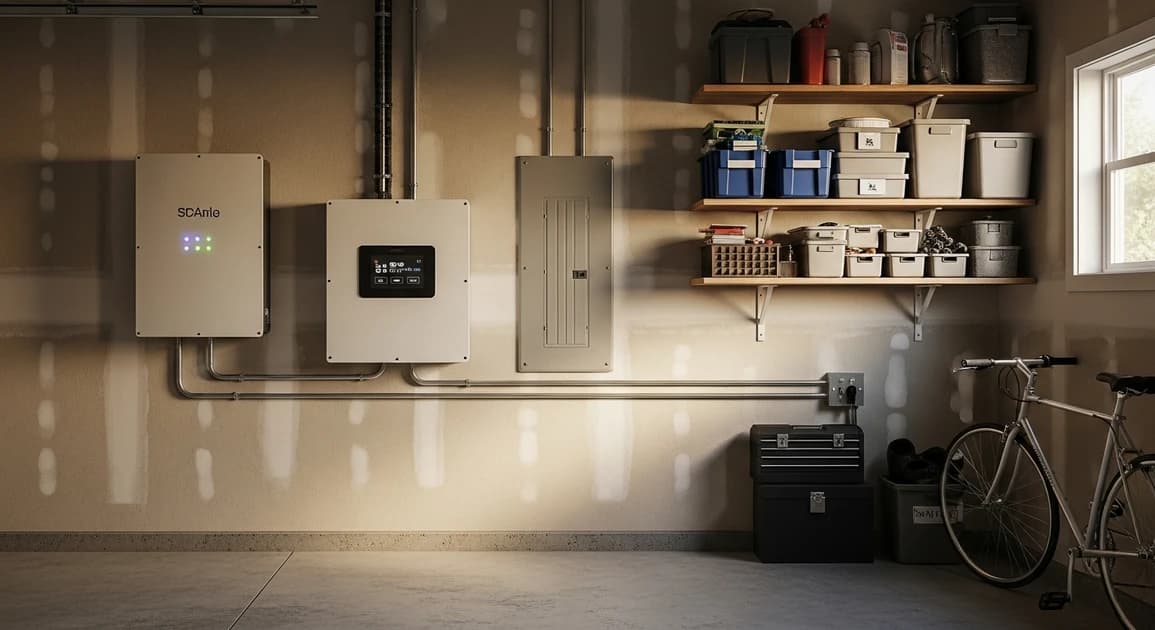
A surprising number of Houston homeowners assume a battery and solar panels are a package deal, so they put off backup power they actually want. They are not a package deal. You can install a home battery with no solar at all: it charges from the grid, holds that energy, and powers your home when the grid goes down. For a lot of households, a standalone battery is the faster, simpler way to get outage protection, with solar as an option for later. This guide explains how a no-solar battery works, what it costs, and who it is right for.
[INTERNAL-LINK: get a standalone battery quote in under 2 minutes -> /home-backup-planner?source=blog&slug=home-battery-backup-without-solar-standalone-houston]
Key Takeaways
- A home battery does not require solar; a standalone system charges directly from the grid.
- It fills up from grid power, holds the charge, and powers your home during an outage, then recharges automatically when the grid returns.
- Installed cost without solar runs roughly $12,000 to $30,000 depending on capacity.
- A standalone battery typically cycles only 50 to 150 times a year (outage events plus optional opportunistic use), so the cells last a long time.
- Solar is optional and can be added later; many Houston buyers get backup first and panels when budget allows.
Can you get a home battery without solar?
Yes. A home battery is a standalone product that does not require solar panels to function. The battery charges from your existing grid connection, stores that energy, and discharges it to power your home during an outage. Solar is a way to recharge the battery for free during the day, but it is entirely optional and separate from the battery's core backup job.
This trips people up because solar and storage are so often sold together. But the battery is the part that actually delivers backup power; solar just helps refill it. If your goal is to keep the lights on during Houston's outages, a battery alone does that job, with or without panels on the roof.
[INTERNAL-LINK: the flip side, when you already have solar -> /blog/battery-backup-when-you-already-have-solar-texas]
How does a standalone battery charge and work?
A standalone battery keeps itself topped up from the grid, so it is full and ready whenever an outage hits. In normal conditions, it draws a small amount of grid power to stay charged, optionally favoring cheaper off-peak hours if you are on a time-of-use plan. When the grid fails, the system detects the outage and switches your home over to battery power, typically in a fraction of a second, fast enough that most electronics never blink.
When grid power returns, the battery recharges itself automatically, no action required from you. Houston averages more than 20 grid interruptions a year, and a standalone battery handles them invisibly. The smart panel manages which circuits stay powered so your stored energy goes to the loads that matter most.
[INTERNAL-LINK: see how Eos sizes a standalone battery for your home -> /home-backup-planner?source=blog&slug=home-battery-backup-without-solar-standalone-houston]
Citation capsule. A home battery does not require solar; a standalone system charges from the grid, stores the energy, and powers the home during an outage, switching over in a fraction of a second and recharging automatically when the grid returns. Installed cost without solar runs roughly $12,000 to $30,000 depending on capacity, with the cells cycling only 50 to 150 times a year.
How much does a battery cost without solar?
A standalone home battery in Houston runs roughly $12,000 to $30,000 installed, depending on how much capacity you choose and any electrical work your panel needs. A single-battery critical-load system sits at the low end; a larger multi-battery whole-home configuration reaches the upper end. Because there are no panels, racking, or roof work, a standalone install is often simpler and faster than a combined solar-plus-storage project.
We do not publish a flat price, because the right number depends on your panel, the loads you want backed up, and your home's specifics. The point of this guide is the decision, not a quote: skipping solar does not disqualify you from owning a battery, and it can lower the upfront project scope. For the broader cost picture, see our home battery backup cost guide for Texas.
Who buys a battery without solar?
Plenty of Houston households are better served by a standalone battery, at least to start. The common cases share a theme: they want resilience now and solar is either impractical or a later decision.
Typical standalone buyers include homeowners with heavily shaded or north-facing roofs where solar would underperform, those in HOAs with restrictive solar rules, budget-minded buyers who want backup first and solar when finances allow, and people who simply want outage protection without a roof project. In all of these, the battery delivers the resilience; solar can join later without replacing anything.
Sizing a battery without solar
Without solar, size the battery a notch larger than you might with panels, because you lose the daytime recharge that extends runtime during a long outage. A solar home can refill its battery each sunny day mid-outage; a standalone home runs on whatever it stored before the grid went down, until power returns. For the multi-day outages Houston saw after Beryl, that argues for 18 to 27 kWh for most homes rather than the smallest tier.
The upside is simplicity and predictability: you know exactly how much energy you have, and the smart panel stretches it across your priority circuits. If you add solar later, your standalone battery is already sized with headroom, and the panels simply extend its runtime. For whole-home sizing logic, see our Houston home battery backup guide.
[INTERNAL-LINK: book a free standalone battery assessment -> /home-backup-planner?source=blog&slug=home-battery-backup-without-solar-standalone-houston]
Or call our Houston office at (713) 462-2202 to size a standalone system around your loads.
Ready to move forward?
If you have been holding off on backup power because you are not ready for solar, that barrier is not real. A standalone home battery gives you full outage protection on its own, charges from the grid, and keeps solar open as a future upgrade. The next step is a quick look at your panel and loads to size the system for your home.
[INTERNAL-LINK: get a standalone home battery quote -> /home-backup-planner?source=blog&slug=home-battery-backup-without-solar-standalone-houston]
FAQ
Can I get a home battery without solar?
Yes. A home battery is a standalone product that charges from your grid connection and powers your home during an outage with no solar panels required. Solar is an optional way to recharge the battery for free during the day, but it is separate from the battery's backup function. If your goal is outage protection, a battery alone delivers it, and you can add solar later if you choose.
How does a battery without solar charge?
A standalone battery charges from the grid, drawing a small amount of power to stay topped up so it is ready when an outage hits, optionally favoring off-peak hours on a time-of-use plan. During an outage it powers your home from stored energy, and when grid power returns it recharges itself automatically. No solar input is needed at any point in that cycle.
How much does a home battery cost without solar?
A standalone home battery in Houston runs roughly $12,000 to $30,000 installed, depending on capacity and any panel work required. Because there are no panels or roof work, the install is often simpler than a combined solar-plus-storage project. A single-battery critical-load system is at the low end; a whole-home multi-battery configuration reaches the high end. We quote a fixed scope after a site survey.
Will the battery wear out fast if it charges from the grid?
No. A standalone battery typically cycles only 50 to 150 times a year, mostly during outages plus any optional opportunistic use, which is gentle on the cells. Eos systems carry a 10-year warranty with a defined capacity-retention floor. Charging from the grid to stay ready does not meaningfully shorten battery life, because the system is not deep-cycling every day the way a heavily used solar-shifting battery might.
The bottom line
You do not need solar to own a home battery. A standalone system charges from the grid, holds that energy, and powers your home through an outage, then refills itself when the grid comes back. It costs roughly $12,000 to $30,000 installed, cycles lightly, and keeps solar open as a future add-on. If solar was the only thing standing between you and backup power, a standalone battery removes that barrier entirely. Size it a little larger to make up for the lack of daytime recharge, and you have full outage protection without a single panel.
[INTERNAL-LINK: get a standalone home battery backup quote -> /home-backup-planner?source=blog&slug=home-battery-backup-without-solar-standalone-houston]