What Happens If Your Home Battery Breaks? (Texas Warranty Guide)

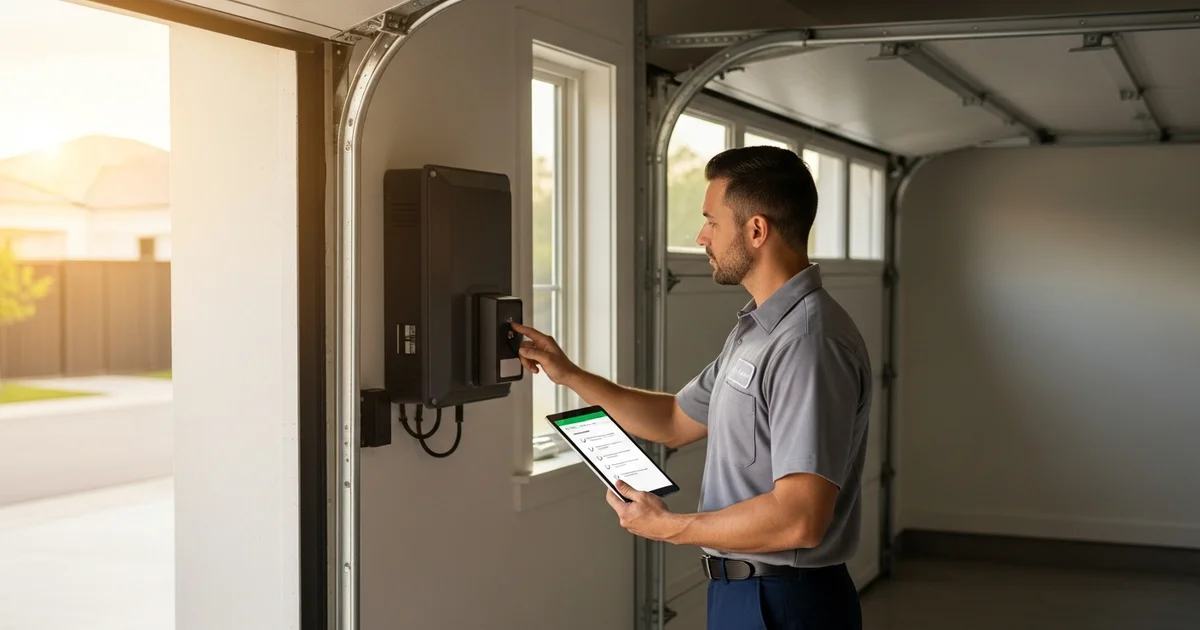
A home battery is a 10-year contract. So the question that should decide your purchase is not "will it break?" but "what happens when it does?" Most buyers fixate on price and capacity, then discover too late that who handles a failure matters more than the warranty paper itself. This guide walks the real claim path in Texas: exactly what is covered, who you call first, how long a claim takes, and how to keep your coverage from lapsing.
Key Takeaways
- Most LFP home batteries carry a 10-year or throughput warranty guaranteeing roughly 70% capacity retention at term end (Tesla, 2026).
- You call your installer first, not the factory. A local installer diagnoses on-site and files the manufacturer claim for you.
- Coverage lapses most often from an install, registration, or service gap, not from a manufacturing flaw.
- A defect claim and a capacity-retention claim are two different processes with different evidence requirements.
[INTERNAL-LINK: get a Houston battery backup quote in under 2 minutes -> /home-backup-planner?source=blog&slug=home-battery-warranty-claim-process]
What Does a Home Battery Warranty Actually Cover?
Most LFP home batteries carry a 10-year warranty, or a throughput cap, guaranteeing roughly 70% capacity retention at term end (Tesla, 2026). In plain terms, the manufacturer promises the battery will still hold about seven-tenths of its original usable energy after a decade of normal use. That covers two distinct failure types.
The first is a manufacturing defect: a cell, control board, or inverter that fails to work as designed. The second is a capacity-retention shortfall: the battery still runs but degrades below the guaranteed floor before the warranty ends. Both are covered, but they trigger different evidence requirements, which I will come back to.
What is typically excluded? Misuse, unapproved modifications, an install performed by a non-certified party, physical or flood damage, and unauthorized firmware. The inverter is often warranted on a separate schedule from the battery, so read both lines.
According to manufacturer warranty terms, a Tesla Powerwall carries a 10-year warranty with a 70% capacity retention floor, while Sigenergy's SigenStor pairs a 10-year or roughly 8,000-cycle battery warranty with separate 10-year inverter coverage (Sigenergy, 2026). Enphase IQ batteries run 10 years standard, extendable, with a retention floor near 60 to 70% (SolarInsure, 2026).
What Is Not Covered: The Fine Print That Voids Claims
The fastest way to lose coverage is an install or maintenance gap, not a manufacturing flaw. A perfectly healthy battery can become an uncovered battery if the paperwork and conditions behind it slip.
The common voiders: an install by a non-certified party, skipped required service intervals, no product registration, physical or flood damage, and unauthorized firmware changes. Connectivity matters too. Sigenergy drops to a 5-year battery warranty without reliable internet, because the manufacturer cannot monitor a unit it cannot see (Sigenergy, 2026).
Timing is its own trap. Sigenergy requires claims be filed within 30 days of the issue date, or you risk voiding the claim entirely (Sigenergy, 2026). Coverage lapses far more often from an install, registration, or service gap than from a genuine defect, which is exactly why documentation is the quiet hero of any claim.
Our finding: On Eos service calls, the single most common reason a Houston warranty claim stalls is not a hardware problem. It is a missing registration or no dated maintenance records. The homeowner has a covered failure but cannot prove the unit was set up and serviced correctly.
Who Do You Call First, the Installer or the Manufacturer?
You call your installer first. In nearly every case the installer is your warranty point of contact and files the manufacturer claim on your behalf, so you are never negotiating with a factory service desk on your own.
The standard claim path runs in four steps. First, the installer diagnoses the unit on-site. Second, the installer opens a ticket with the manufacturer. Third, the manufacturer authorizes a repair, replacement, or refund. Fourth, the installer performs the swap. Tesla, for example, resolves a valid claim by repair with new or refurbished parts, equivalent replacement, or a market-price refund, at its discretion (Tesla, 2026).
Contrast that with the national or online-seller path. When you buy from an out-of-state or web-only seller, you can become the middleman: diagnosing the problem yourself, chasing the manufacturer's general support line, and scheduling whatever third-party tech the factory can find in your area. Each handoff adds days.

[INTERNAL-LINK: book a free Houston home assessment -> /home-backup-planner?source=blog&slug=home-battery-warranty-claim-process]
Want to see how the service relationship is built into the purchase? You can [INTERNAL-LINK: compare battery backup plans -> /plans] and pick the tier that matches your home before you ever file a claim.
How a Local Houston Installer Shortcuts the Process
Local service collapses the slowest part of any claim: the diagnosis-and-dispatch loop. A nearby team can be at your home within days instead of waiting on an out-of-state tech to get routed and scheduled.
A local installer already holds your registration and service history, so step one of any claim is half-finished before the call ends. That same team maintains a working relationship with the manufacturer's service-partner network, which means tickets get opened correctly the first time. And during hurricane season, when a failure is most likely and least convenient, a local crew can prioritize your home rather than slot you into a national queue.
Here is the buried distinction most buyers miss. A defect claim and a capacity-retention claim are two different processes. A defect claim needs fault evidence: error codes, a failed component, a unit that will not hold charge. A capacity-retention claim needs trend evidence: months of monitoring data showing the battery has degraded below its guaranteed floor. National sellers rarely explain the difference. A local installer documents both from day one, so whichever claim you eventually need, the proof already exists.
For more on the records that keep a claim moving, see our guide to [INTERNAL-LINK: yearly battery maintenance -> /blog/home-battery-backup-maintenance-houston].
How Long Does a Warranty Claim Take?
Turnaround splits into three stages: diagnosis, manufacturer authorization, and the physical swap. The local-versus-remote gap shows up mostly in the first and last, where someone has to physically reach your home.
What speeds it up? Registration already on file, monitoring data already shared with the manufacturer, and parts held in regional stock. What slows it down? Seasonal load. Hurricane season swamps service queues across the Gulf Coast, so a failure in July competes with thousands of others for the same techs and the same parts.
In practical terms, a local on-site diagnosis can happen within days, while a national seller may take a week or more just to route a technician. Authorization and parts add their own time on both paths. The timeline chart above shows where those days accumulate, and why the diagnosis stage is the one worth optimizing for.
How to Protect Your Coverage From Day One
Three habits keep a claim friction-free: register the product, keep the unit online, and bank dated maintenance records. Do these from the install date and you remove almost every reason a manufacturer can deny a valid claim.
Register the battery and inverter at install, not later. Keep the internet connection live so monitored units like Sigenergy stay on full coverage. Schedule yearly professional service and save the report each time. Bank monthly app screenshots and the original install documentation packet, so a capacity-retention claim has the trend data it needs. Keep proof of ownership in case you sell the home and transfer the warranty.
For brand-specific terms and a local service relationship, compare the [INTERNAL-LINK: best home battery brands in Texas -> /blog/best-home-battery-brands-texas], and if you are still weighing the basics, start with our overview of [INTERNAL-LINK: home battery backup in Houston -> /blog/home-battery-backup-houston-texas].
Frequently Asked Questions
Does a home battery warranty transfer when I sell my house?
Most warranties transfer to a subsequent owner who provides proof of ownership (Tesla, 2026). Register the transfer with the manufacturer to keep coverage clean and avoid a gap. Keep the original install documentation and any service reports with the home sale paperwork so the new owner inherits a complete record.
What is the difference between a 10-year warranty and a throughput warranty?
A calendar warranty covers a fixed number of years. A throughput or cycle warranty covers a total amount of energy cycled through the battery, such as roughly 8,000 cycles on a Sigenergy SigenStor (Sigenergy, 2026). Coverage ends at whichever limit you reach first, the years or the cycles.
Will Houston heat void my battery warranty?
No, heat alone does not void coverage. What voids it is skipping required service, a bad install location, or a non-certified installer. Most LFP batteries are rated to operate through Texas summers, and manufacturers like Tesla still guarantee a 70% retention floor at 10 years (Tesla, 2026).
Who pays for the service visit on a valid claim?
On a valid manufacturer claim, the covered repair or replacement is handled per the warranty terms, and your installer coordinates the work. Tesla resolves valid claims by repair, equivalent replacement, or refund at its discretion (Tesla, 2026). Always confirm labor and dispatch terms in your specific warranty document.
Ready to Move Forward?
The warranty length is not the real question. The claim path is. Buy from a local Houston installer and you call one number, get an on-site diagnosis in days, and let that team file the manufacturer claim while you stay protected. Keep your registration, internet, and service records current, and a failure becomes a scheduling problem, not a crisis.
[INTERNAL-LINK: get a fixed-price install quote for your address -> /home-backup-planner?source=blog&slug=home-battery-warranty-claim-process]
Prefer to talk it through? Call Eos for a free Houston home assessment and we will map your coverage and service plan before you commit.