Own Your Home Battery vs a Backup Subscription in Houston

After Hurricane Beryl knocked out power for roughly 2.2 million CenterPoint customers across the Houston metro (Houston Public Media, 2024), Houston homeowners stopped asking only "should I get backup." Now they ask a sharper question: should I own it, or subscribe to it? New subscription backup plans advertise a low or even zero upfront cost, which is genuinely attractive. But that structure trades long-term control for short-term affordability. This guide is an honest, side-by-side look at who owns the hardware, the 10 to 15 year cost, control over your stored energy, what happens if the provider changes terms or exits, and resale impact.
[INTERNAL-LINK: check if your home qualifies for a 9 to 45 kWh owned system -> /home-backup-planner?source=blog&slug=eos-vs-base-power-houston-ownership-vs-subscription]
Key Takeaways
- A subscription lowers your entry cost but keeps the hardware, the stored energy, and the terms in someone else's hands.
- Owning your battery costs more upfront, yet it ends the monthly fee, gives you full control of your power, and reliably counts toward resale.
- Solar-equipped homes sold for about 6.8% more than comparable homes, and that lift depends on ownership (SolarReviews, 2024).
- Choose subscription for low cash out today, ownership for control over a 10 to 15 year horizon.
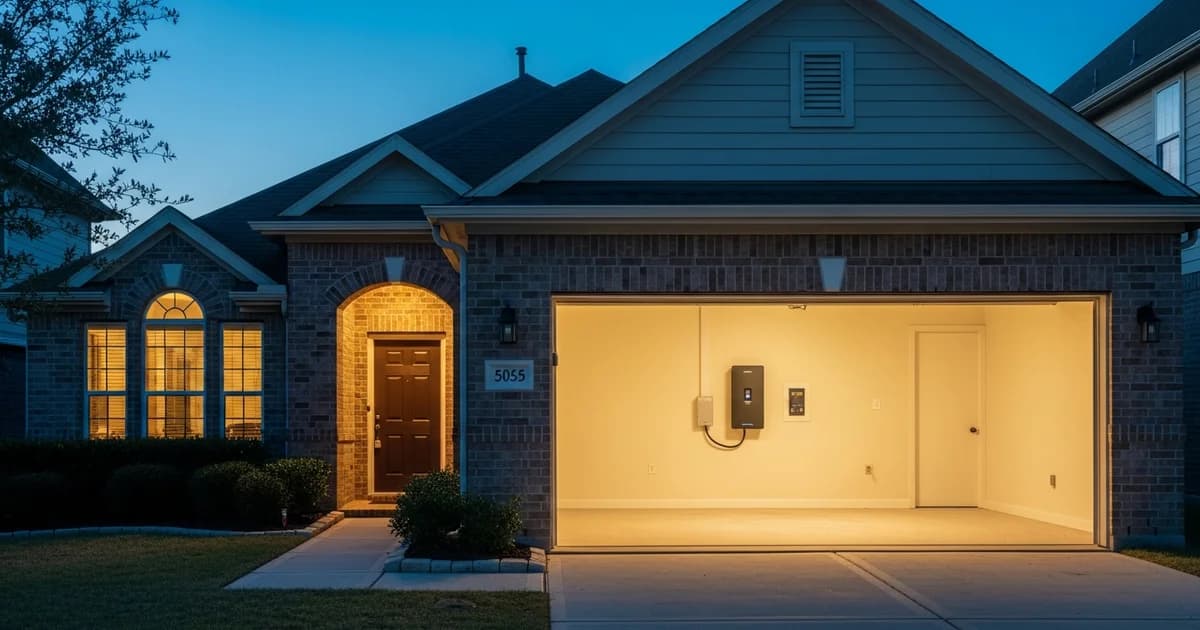
[IMAGE: A Houston-area suburban home at dusk with a wall-mounted home battery visible in an open garage, calm editorial real-estate style - search "suburban home dusk garage home battery"]
What does each model actually mean?
Ownership means you buy the battery, with cash or a home-improvement loan, the hardware is yours, and once the loan is paid there is no recurring fee. A subscription means you pay a recurring monthly fee for backup as a service, and a third party typically keeps ownership of the hardware and sets the terms. The plainest way to say it: in ownership you are buying an asset, in subscription you are buying access.
Where leases and PPAs fit
A lease or power-purchase agreement is a close cousin of the subscription. In all three, ownership of the equipment stays with the provider, and you pay over time for the right to use it. The labels differ, but the structural question is the same: at the end of the term, who holds the box on your wall?
Why the distinction drives every other tradeoff
Once you know who owns the asset, the rest of the comparison falls into place. Cost, control, provider risk, and resale all flow from that single fact. An owned system answers to you. A subscribed system answers to a contract.
Citation capsule: In a home battery ownership model, the homeowner buys the hardware outright with cash or a loan and owns the asset; in a subscription model, a third party typically retains ownership of the battery and sets the usage terms, so the homeowner buys access rather than an asset (EnergySage, 2026).
For the financing side of ownership, see [INTERNAL-LINK: the full cash, loan, and monthly-payment cost breakdown -> /blog/home-battery-backup-cost-texas].
Who owns the hardware and the stored energy?
In a subscription model, the provider usually owns the battery on your wall and, in many designs, controls how the stored energy is dispatched. In an ownership model, both the hardware and the energy inside it are yours. That difference decides whether you or a contract gets the final say during an outage.
Why dispatch control matters
Many third-party-owned systems reserve the right to dispatch your battery for grid programs, hold a minimum reserve, or shift energy on a schedule the provider sets. When you own the system, you set the reserve, you pick which circuits get priority, and you decide when to draw the stored energy down.
Expanding or modifying the system
Ownership also keeps the door open for changes. Want to add capacity, pair the battery with solar later, or re-prioritize circuits? An owned system is yours to modify within code. A subscribed system usually locks the configuration to the provider's standard offering.
Citation capsule: Third-party-owned storage arrangements, including leases, power-purchase agreements, and subscriptions, generally keep both hardware ownership and dispatch control with the provider, while an owned residential battery leaves both the equipment and the stored energy under the homeowner's control (EnergySage, 2026).
[IMAGE: Wall-mounted lithium home battery installed on a garage wall in a Houston home - search "home battery wall mount garage"]
What does the 10 to 15 year cost really look like?
Subscriptions look cheaper in year one and can be more expensive by year ten, because the fee never stops while an owned system's cost does. Residential batteries are commonly rated for a 10 to 15 year service life (EnergySage, 2026), which is the same window over which a recurring fee keeps accumulating. That is the heart of the math.
The crossover concept
A monthly fee paid indefinitely adds up year after year. An owned system has a finite cost: cash paid once, or a loan that ends. At some point the running total of subscription payments crosses above the one-time cost of owning. After that crossover year, every additional subscription payment is money an owner would no longer be spending.
The chart below shows the crossover concept with illustrative numbers only, not Eos plan prices. It compares a recurring fee paid every year against a one-time owned cost held flat. The subscription line keeps climbing, the ownership line stays put, and they cross somewhere inside the system's service life.
[CHART: line chart, title="Cumulative Spend Over 15 Years: Ownership vs Subscription (illustrative, not Eos pricing)", series=["Subscription (recurring fee)","Ownership (one-time cost)"], x-axis="Year 1 to Year 15", note="Illustrative concept only, no Eos plan prices"]
How Eos structures ownership
Eos sells owned systems across Essential 9 kWh, Plus 18 kWh, Pro 27 kWh, Premium 36 kWh, and Ultimate 45 kWh. You can pay cash or choose a fixed monthly payment that ends, which is the opposite of a perpetual subscription. A loan payment stops once the system is paid off. A subscription fee does not.
[INTERNAL-LINK: see your monthly payment for an owned whole-home backup -> /home-backup-planner?source=blog&slug=eos-vs-base-power-houston-ownership-vs-subscription]
[INTERNAL-LINK: see Eos owned systems from 9 to 45 kWh -> /plans]
How much control do you keep over your own power?
Ownership gives you final say over how and when your stored energy is used. A subscription puts part of that decision inside the provider's contract. During a multi-day Houston outage, that distinction stops being a convenience and becomes a question of resilience.
Terms, throttling, and reserve levels
A provider may set a minimum reserve you cannot dip below, dispatch your battery for a grid program, or change usage rules as the contract allows. An owner sets the reserve, picks the priority circuits, and decides when to ride the battery hard. When the grid is down for days, you want unconditional access to the energy you paid for.
Control is not just about preference. It is about whether your backup behaves the way you expect during the exact event you bought it for. A reserve rule that protects a grid program in normal times can leave you with less usable energy in a long outage than you assumed.
To weigh whether backup pays off for your specific situation, read [INTERNAL-LINK: whether home battery backup pays off in Texas -> /blog/is-home-battery-backup-worth-it-texas].
What happens if the provider changes terms or exits the market?
This is the risk the brand-versus-brand comparisons skip. A subscription is only as durable as the company behind it. A fee increase, an acquisition, service throttling, or a shutdown can change your backup posture without your consent. Ownership has no counterparty to depend on, because the hardware and the energy are already yours.
Questions to ask before you sign a subscription
Ask what happens to the hardware if the company is acquired or folds. Ask whether the fee can rise, and by how much. Ask who maintains the unit, whether you can buy out the system, and what the exit and removal process looks like. Clear answers are a good sign. Vague ones are the risk.
Honest balance
Reputable subscription providers exist, and many will honor their terms for years. The point here is structural, not an accusation. When the durability of your backup depends on another company's business decisions, you carry a counterparty risk that an owned system simply does not have.
What we hear from Houston homeowners after an outage is that they want the battery to be theirs, not rented. After Beryl and the 2021 freeze, the sentiment in our estimates shifted from "what does it cost" to "is it mine when I need it." That instinct is exactly the counterparty question, stated in plain language.
[CHART: lollipop chart, title="Ownership vs Subscription Across Five Decision Factors (qualitative)", categories=["Hardware ownership","Energy control","Fee certainty","Provider-exit exposure","Resale eligibility"], series=["Ownership","Subscription"], note="Qualitative scoring, no prices"]
Which model actually counts at resale?
An owned battery can count toward your home's value. A subscribed or leased system usually does not, and it can complicate the sale because the buyer must assume or terminate the contract. In 2024, homes with solar sold for roughly 6.8% more than comparable homes (SolarReviews, 2024), and that resale lift depends on ownership.
Why ownership decides the resale outcome
Appraisers and buyers treat a transferable owned asset differently from an ongoing third-party obligation. An owned battery transfers with clean title, like any other permanent home improvement. A subscribed or leased system carries a contract the buyer must take over or cancel, which is friction at closing rather than added value.
The contract-transfer problem
At the closing table, a third-party agreement becomes a negotiation. The buyer's lender may flag it, the buyer may not want the obligation, and termination can carry a cost. None of that applies to a battery you own outright.
For the deeper resale breakdown, see [INTERNAL-LINK: how ownership decides whether a battery counts at resale -> /blog/home-battery-increases-home-value-texas].
Which model is right for your Houston home?
Pick subscription if your top priority is the lowest cash out the door today, and you are comfortable with a recurring fee and a provider holding the terms. Pick ownership if you want control of your power, an end to the monthly fee over a 10 to 15 year horizon, and resale value. Both are valid. The right answer depends on what you optimize for.
Choose subscription if
You want minimal upfront cash, you are fine with paying indefinitely, you do not plan to sell soon, and you trust the provider to honor its terms over many years.
Choose ownership if
You want the fee to end, you want unconditional control of your stored energy during long outages, you care about resale value, and you would rather not depend on another company's continuity for your backup.
[INTERNAL-LINK: get a fixed-price install quote for your address -> /home-backup-planner?source=blog&slug=eos-vs-base-power-houston-ownership-vs-subscription]
Prefer to talk it through? Call 832-310-9000 for a straight answer on owning versus subscribing for your specific Houston home.
FAQ
Is it better to own a home battery or pay a monthly subscription?
It depends on your horizon. Ownership wins long-term control, resale value, and ends the fee, while a subscription wins the lowest upfront cost. Because batteries are rated for a 10 to 15 year service life (EnergySage, 2026), a recurring fee can outrun a one-time owned cost inside that window.
What happens to my backup if the subscription provider changes terms or shuts down?
A subscription is only as durable as the company behind it. A fee increase, acquisition, service throttling, or shutdown can change your backup without your consent. An owned system has no counterparty, because the hardware and the stored energy are already yours, so your backup does not depend on another company's continuity.
Does a subscription or leased battery add resale value?
Usually no. Owned systems are the ones that count, because solar-equipped homes sold for about 6.8% more than comparable homes (SolarReviews, 2024) and that lift depends on ownership. A leased or subscribed system carries a contract the buyer must assume or cancel, which is friction at closing rather than value.
Who controls the energy stored in a subscription battery?
Often the provider, partly, through the contract. Many third-party-owned designs let the provider set reserve levels and dispatch the stored energy for grid programs (EnergySage, 2026). Owners set their own reserve, pick priority circuits, and keep unconditional access to their energy during a long outage.
How does Eos structure its systems, ownership or subscription?
Eos sells owned systems, not subscriptions. Capacities run from Essential 9 kWh to Ultimate 45 kWh, available as cash or a fixed monthly payment that ends rather than a perpetual fee. You own the hardware and the stored energy. See the [INTERNAL-LINK: Eos owned systems from 9 to 45 kWh -> /plans] or [INTERNAL-LINK: get a fixed-price ownership quote for your address -> /home-backup-planner?source=blog&slug=eos-vs-base-power-houston-ownership-vs-subscription].
The bottom line
A subscription backup plan looks cheaper on day one. By year ten, the picture often flips. Subscription means low entry, less control, weak resale, and counterparty risk. Ownership means a higher entry cost, full control, resale eligibility, and no dependence on a provider's continuity. Neither is universally right. The honest answer comes down to whether you optimize for cash-today or control-over-a-decade. If you want backup that is yours the moment the grid goes down, ownership is the structure built for that.
[INTERNAL-LINK: get a fixed-price ownership quote for your Houston address -> /home-backup-planner?source=blog&slug=eos-vs-base-power-houston-ownership-vs-subscription]