Generac PWRcell vs Sigenergy in Houston (2026)

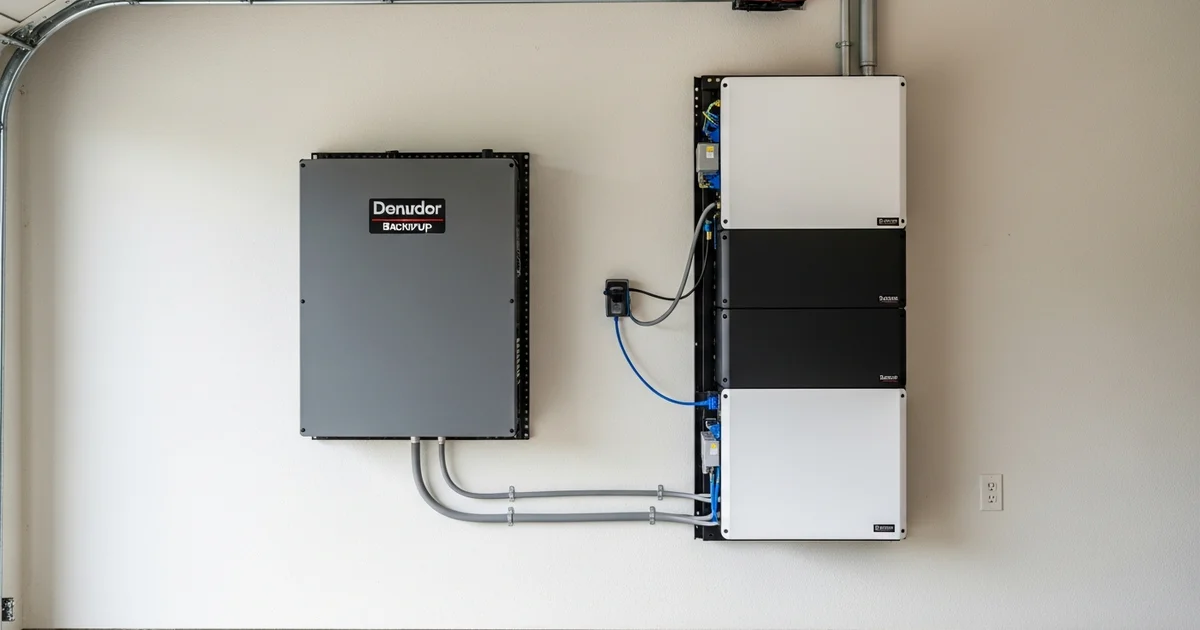
Texas logged 210 major weather-related power outages between 2000 and 2023, more than any other state (Climate Central, 2024). So it makes sense that Houston homeowners know Generac. The name is on half the standby generators humming in the suburbs. What surprises a lot of those same homeowners is that Generac also sells a battery, the PWRcell, and that battery competes very differently from a modular newcomer like Sigenergy. Brand familiarity is real. It is not, however, the same thing as the best whole-home battery fit. Here is the honest, spec-level comparison.
Key Takeaways
- Generac PWRcell scales in 3 kWh battery modules, holding 3 to 6 modules per cabinet for 9 to 18 kWh (Generac, 2026).
- Sigenergy SigenStor stacks roughly 6 to 48 kWh inside one cabinet with an integrated 3.8 to 11.5 kW hybrid inverter (Sigenergy, 2026).
- Sigenergy adds bidirectional V2X EV charging through CCS1 and NACS connectors. Generac's battery line does not offer V2X.
- PWRcell suits households already invested in Generac home-standby gear; Sigenergy suits buyers who want more usable capacity per cabinet.
[INTERNAL-LINK: get a Houston battery backup quote in under 2 minutes → /home-backup-planner?source=blog&slug=generac-pwrcell-vs-sigenergy-houston]

Generac PWRcell vs Sigenergy at a glance
In 2026, the two systems split on architecture before they split on anything else. The Generac PWRcell is an AC-coupled modular battery tied to Generac's home-energy ecosystem and its PWRmanager load-control device. A single PWRcell cabinet accepts three to six 3 kWh battery modules, so it holds 9 to 18 kWh (Generac, 2026). The Sigenergy SigenStor is a DC-coupled all-in-one stack: battery, hybrid inverter, and an optional V2X EV interface live in one cabinet that scales from roughly 6 to 48 kWh (Sigenergy, 2026).
That is the whole story in one sentence. One brand bolts a battery onto an established generator ecosystem. The other folds the battery, inverter, and EV charger into a single growing cabinet. Both are LFP. Both back up a Houston home. They reach very different ceilings.
Citation capsule. Generac PWRcell expands in 3 kWh battery modules, holding three to six per cabinet for 9 to 18 kWh, while Sigenergy SigenStor scales roughly 6 to 48 kWh inside one cabinet with an integrated 3.8 to 11.5 kW hybrid inverter and optional bidirectional V2X (Generac, Sigenergy, 2026).
[UNIQUE INSIGHT] Most "Generac battery" content online quietly conflates the PWRcell with a Generac standby generator. They are different products. The brand you trust for a gas generator does not automatically lead on battery specs.
Usable capacity and whole-home output in Houston
For genuine whole-home backup through a Texas summer, two numbers matter most: total usable kWh and continuous kW. A 4-ton Houston AC plus a refrigerator, a few fans, and lights draws real power for hours, not minutes. The PWRcell inverter is rated around 7.6 kW continuous, and one cabinet tops out at 18 kWh (Generac, 2026). Sigenergy's hybrid inverter reaches 11.5 kW continuous, and its stack reaches roughly 48 kWh in a single cabinet (Sigenergy, 2026).
What does that mean when the grid drops? With less battery on board, Generac leans on PWRmanager to shed circuits, keeping a smaller battery alive longer by powering fewer loads at once. Sigenergy's larger single stack can keep more circuits live without the same aggressive load shedding. Neither approach is wrong. One stretches a smaller pack; the other starts with a bigger pack.
[PERSONAL EXPERIENCE] In Houston homes I have walked, the PWRmanager approach works fine if a family is comfortable with the AC dropping off during a long outage. Households that want the AC to simply stay on, the most common request I hear, gravitate toward the larger usable capacity.
Citation capsule. Generac PWRcell delivers about 7.6 kW continuous from a single inverter with up to 18 kWh per cabinet, while Sigenergy SigenStor reaches 11.5 kW continuous and roughly 48 kWh per cabinet, giving a single Sigenergy stack more headroom to keep a Houston home's AC running through a summer outage (Generac, Sigenergy, 2026).
[INTERNAL-LINK: compare Eos battery plans from 9 to 45 kWh → /plans]
Modular expansion and V2X
Expansion granularity and EV integration are the clearest differentiators between these two. PWRcell grows in 3 kWh steps, and a cabinet caps at 18 kWh (Generac, 2026). To go bigger, you add a second cabinet. Sigenergy grows by stacking battery modules inside the same SigenStor cabinet, climbing to roughly 48 kWh before you need a second enclosure (Sigenergy, 2026). Finer steps versus a far higher single-cabinet ceiling.
Then there is V2X, and this is not a close call. Sigenergy's SigenStor supports bidirectional EV charging through dual CCS1 and NACS connectors, which means a compatible EV can both charge from the system and feed power back to the home (Sigenergy, 2026). An EV's pack can act as mobile backup. Generac's battery line does not address V2X at all. If using your car as part of your home backup matters to you, the comparison ends right here.
For a deeper look at where Generac's gear sits against the field, see how [INTERNAL-LINK: Generac stacks up against Powerwall and Enphase → /blog/generac-vs-powerwall-vs-enphase-texas] and which brands lead in [INTERNAL-LINK: the best home battery brands for Texas → /blog/best-home-battery-brands-texas].
Heat tolerance and ERCOT outages
Houston heat and ERCOT grid instability stress any battery's thermal design and cycling life. With Texas leading the nation in major weather-related outages over the past two decades (Climate Central, 2024), the design question is not whether your battery faces a long, hot outage. It is when. Both PWRcell and SigenStor use LFP chemistry, which tolerates Texas heat better than older lithium formats and resists thermal runaway.
What separates them in practice is siting and capacity headroom. A garage in August can hit 105 degrees, and both systems will throttle output to protect themselves when temperatures climb. The system that started with more usable kWh has more margin to give before backup quality suffers. That is the practical Houston case for capacity headroom: not because you use 48 kWh every day, but because heat derating eats into whatever you started with.
Curious how either compares to running a gas unit through the same outage? Read [INTERNAL-LINK: battery backup vs a whole-house generator in Texas → /blog/home-battery-backup-vs-generator-texas].
Cost and what drives the Houston install price
Installed cost is driven by usable kWh, inverter size, electrical panel work, permitting, and labor. Brand name alone is not a line item. A 9 kWh PWRcell cabinet and a 9 kWh Sigenergy stack land in a similar neighborhood; the gap widens as you scale, because Sigenergy keeps adding modules to one cabinet while PWRcell eventually needs a second enclosure to pass 18 kWh.
The honest framing: if your home needs a panel upgrade, a sub-panel, or a long conduit run, that work costs the same regardless of which battery sits on the wall. Eos prices whole-home backup by tier, from the Essential 9 kWh build up through Plus 18 kWh, Pro 27 kWh, Premium 36 kWh, and Ultimate 45 kWh, so the quote tracks usable capacity and site complexity, not a logo. We quote a fixed install price for your address rather than a vague per-kWh average.
[INTERNAL-LINK: get a fixed-price install quote for your address → /home-backup-planner?source=blog&slug=generac-pwrcell-vs-sigenergy-houston]
Warranty and Texas installer support
Both PWRcell and SigenStor carry warranty terms in the same range: roughly 10 years, with throughput and cycle terms layered on top of the calendar years (Generac, Sigenergy, 2026). On paper, the two are close. The real-world difference is who answers the phone in Houston when something needs attention.
A battery is only as good as the local installer who stands behind it. Generac has a long stateside track record and a wide dealer network built around its generator business, which means PWRcell support flows through that same channel. Sigenergy is newer to the US but expanding fast, with certified Texas dealers concentrated around Houston. Full disclosure: Sigenergy is the primary line Eos installs in the Houston metro. I am naming that bias once so you can weight everything above accordingly. The specs come straight from the manufacturers' published datasheets.

Which should a Houston homeowner choose?
Pick by buyer profile, not by which logo you recognize. PWRcell makes the most sense for a household already invested in Generac home-standby gear that values brand continuity and is comfortable with PWRmanager shedding circuits during a long outage. The familiarity is genuine, and the ecosystem is mature.
Sigenergy makes the most sense for a buyer who wants maximum usable capacity per cabinet, a single integrated inverter, room to expand toward 48 kWh without a second enclosure, and bidirectional V2X if an EV is in the picture. For most Houston whole-home buyers I talk to, the deciding factors are capacity headroom and V2X, and on both, Sigenergy leads. Eos installs and supports Sigenergy locally.
[INTERNAL-LINK: book a free Houston home assessment → /home-backup-planner?source=blog&slug=generac-pwrcell-vs-sigenergy-houston]
Call (713) 555-0100 to talk through both options with a Houston installer.
FAQ
Is Generac PWRcell the same as a Generac generator?
No. The PWRcell is a battery storage system, not a fuel-burning standby generator. They share the Generac brand and can sit in the same home-energy ecosystem, but they are different product categories. A generator makes power from natural gas or propane; the PWRcell stores electricity, scaling from 9 to 18 kWh per cabinet (Generac, 2026).
How much does a Generac PWRcell cost installed in Houston?
Installed cost depends on usable kWh, inverter size, electrical panel work, permitting, and labor, not brand alone. A small single-cabinet build sits well below a large multi-cabinet whole-home system. Eos quotes whole-home backup by tier, from Essential 9 kWh through Ultimate 45 kWh, with a fixed price for your specific address rather than a per-kWh estimate.
Does Sigenergy work with an EV like Generac's battery?
Yes, and this is a key gap. Sigenergy's SigenStor supports bidirectional V2X charging through dual CCS1 and NACS connectors, so a compatible EV can charge from the system and feed power back to the home (Sigenergy, 2026). Generac's PWRcell battery line does not offer V2X at all, so an EV cannot serve as backup with it.
Which lasts longer in Texas heat?
Both use LFP chemistry, which handles Houston heat better than older lithium formats and resists thermal runaway. Both throttle output above roughly 105 degrees to protect themselves. The system with more usable kWh keeps more margin once heat derating kicks in, which is the practical case for capacity headroom in a Texas summer (Sigenergy, 2026).
The bottom line
Generac PWRcell wins on brand familiarity and a mature generator-rooted ecosystem. Sigenergy SigenStor wins on usable capacity per cabinet, single-cabinet inverter integration, expansion headroom to 48 kWh, and bidirectional V2X that PWRcell's battery line does not offer. Brand recognition is a familiarity advantage, not a spec advantage. For a Houston home that wants the AC to stay on through a long ERCOT outage and the option to use an EV as backup, Sigenergy is the cleaner long-term path.
[INTERNAL-LINK: see your monthly payment for whole-home backup → /home-backup-planner?source=blog&slug=generac-pwrcell-vs-sigenergy-houston]
Sources
- Climate Central, Weather-related Power Outages Rising, retrieved 2026-06-15, https://www.climatecentral.org/climate-matters/weather-related-power-outages-rising
- Generac, PWRcell Battery System overview and DCB module specifications, retrieved 2026-06-15, https://www.generac.com/
- Sigenergy, SigenStor Home Energy System specifications, retrieved 2026-06-15, https://www.sigenergy.com/