Baytown Battery Backup: What East Harris County Homeowners Need to Know

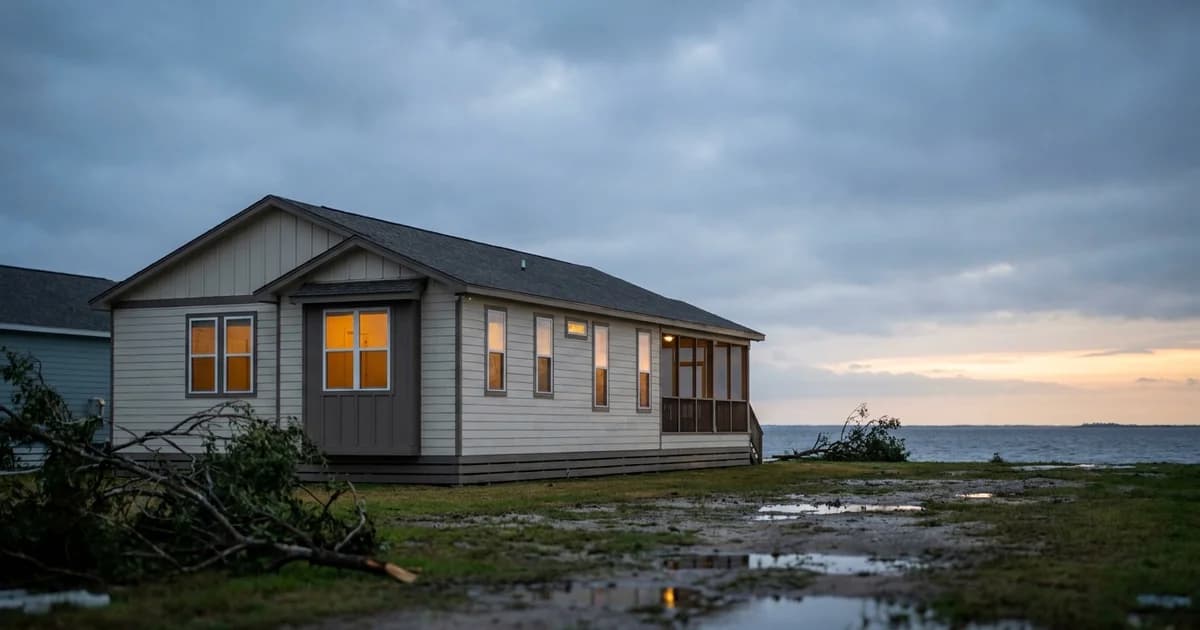
Baytown has water on nearly every side. Galveston Bay to the south, Burnet Bay and the Houston Ship Channel to the west, Cedar Bayou down the eastern edge. Most national home battery guides are written for a dry inland lot on a grid that comes back in four hours. Neither assumption holds here.
The geography drives two separate decisions, and they're worth keeping apart. Hurricane Ike settled where the equipment goes. Hurricane Beryl settled how many hours you buy. This guide works through both using storm records, Census data, and enclosure standards for this stretch of east Harris and west Chambers counties.
Key Takeaways
- Baytown lies in southeastern Harris and western Chambers counties, so the authority that permits and inspects a battery install depends on your address (TSHA).
- In 2008, NOAA's National Hurricane Center recorded Ike surge of generally 15 to 20 ft in parts of Chambers County, with a 17.5 ft high water mark about 10 nautical miles inland (NOAA NHC, 2009).
- After Beryl in July 2024, NWS Houston/Galveston logged heat indices of 100 to 106F for several days while millions had no power (NWS HGX, 2024).
- Salt air near the bay is an enclosure and placement question, not a reason to skip backup.
What makes Baytown different from the rest of the metro?
Baytown holds about 86,395 residents across roughly 34,763 housing units, and it is one of the few cities its size in the region that sits in two counties at once (Census ACS 2024 one-year estimates, via Census Reporter). The Handbook of Texas places it "thirty miles east of downtown Houston in southeastern Harris and western Chambers counties" (TSHA).
That split is not trivia. Electrical permits and inspections follow the authority having jurisdiction for your parcel, so a house on the eastern side of town can answer to a different one than a house near Goose Creek. Confirm which jurisdiction covers your address before you plan an install timeline.
Cedar Bayou is the other feature worth knowing. The Harris County Flood Control District puts its watershed at 202 square miles with 128 miles of open stream channel (HCFCD). Drainage that large on the east side of a bay-front city is a flood consideration long before it is an electrical one.
For the wider picture, see our Houston service area page and our Pasadena service page, the nearest stretch of the same corridor. Our guide to
handles the industrial side of that story.What Hurricane Ike taught the east side about where equipment goes
In 2008, NOAA's National Hurricane Center reported that Ike's highest storm surge hit Bolivar Peninsula and parts of Chambers County, including the east side of Galveston Bay, with ground assessment teams putting it generally between 15 and 20 ft. The highest water mark FEMA collected was 17.5 ft, about 10 nautical miles inland in Chambers County (NOAA NHC, Tropical Cyclone Report: Hurricane Ike, 2009).
Read those numbers carefully, because they are county-scale, not address-scale. The same report estimates surge on the west side of Galveston Bay at 10 to 15 ft and notes that much of southern Chambers County sat under at least 10 ft of water. Baytown is on the northern rim, north of the worst of it.
What Ike settles is placement. Flood exposure decides mounting height, whether the equipment sits on an elevated exterior pad, and whether it belongs on an interior garage wall instead. That is a survey question, not a capacity question.
The next step costs nothing: pull your address on the Harris County Flood Control District's Flood Education Mapping Tool and, for the Chambers County side of town, the FEMA Flood Map Service Center at msc.fema.gov. Note the zone and any base flood elevation. Nobody should be quoting you a mounting height over the phone.
Citation capsule: Storm surge history is a siting input, not a sizing input. NOAA's National Hurricane Center recorded Ike surge of generally 15 to 20 ft in parts of Chambers County and along the east side of Galveston Bay, with a 17.5 ft high water mark roughly 10 nautical miles inland (NOAA NHC, 2009).
For the seasonal planning side of this, our
covers what to do before a named storm enters the Gulf.Beryl was a duration problem, not a wind problem
Beryl came ashore in the early hours of July 8, 2024, and its surge was modest by comparison: generally 4 to 6 ft, with some post-storm surveys finding up to 8 ft of inundation (NWS Houston/Galveston, 2024). The outage was the part that hurt. In 2024, the U.S. Energy Information Administration counted 2.6 million Texas customers without power from the storm (EIA, 2025).
CenterPoint was hit hardest, with more than 2.26 million customers out at peak (KPRC 2, 2024), and roughly a million were still expected to be dark days into the restoration (Utility Dive, 2024). Governor Abbott later directed the utility to improve its severe weather preparation and response (Office of the Texas Governor, 2024).
Then came the heat. NWS Houston/Galveston recorded heat indices of 100 to 106F for several days after Beryl exited and issued Heat Advisories specifically because millions of people had no power. The same report counts 7 fatalities in its area, one of them an indirect death after a person lost power to a medical machine.
The national baseline puts that in perspective. In 2024, U.S. customers averaged 11 hours of interruption, nearly nine of them from major events (EIA, 2025). In Baytown you are not sizing for the two-hour blip. You are sizing for the tail.
Our breakdown of
goes deeper on the load math behind that chart.Salt air, humidity, and the indoor versus outdoor decision
Marine air carries chloride, and chloride drives atmospheric corrosion on outdoor electrical hardware. NASA's Kennedy Space Center runs a beachside corrosion test site that ASM has documented as one of the most corrosive naturally occurring environments anywhere, maintained for decades because coastal exposure eats materials faster than inland exposure does (NASA, Natural Environment Corrosion Testing at the Kennedy Space Center Beachside, 2017).
Baytown is not a launch pad 200 feet from the surf. But a lot on the bay side of town gets more chloride than a lot in Katy, and that shows up as a specification, not a scare story. So what should you ask an installer? Which enclosure type, and why that one here.
| Enclosure | What NEMA says it protects against |
|---|---|
| Type 3R | Falling dirt, rain, sleet, snow, and damage from external ice formation. Corrosion protection is not part of the definition. |
| Type 3RX and Type 4X | The same water and ice protection, plus an additional level of protection against corrosion. |
Those definitions come straight from NEMA's published enclosure types document (NEMA). A Type 3R unit is a fine outdoor enclosure in most of Texas. It just was not defined with chloride in mind.
On Baytown site surveys, two questions come up on almost every visit: how high the pad sits, and whether the equipment should go in the garage instead. Both get decided in person. A garage or interior utility wall removes most of the exposure question outright, which is usually the cleaner answer within a few miles of the bay.
Our comparison of
lays out the tradeoffs in full.Older Goose Creek blocks versus the newer subdivisions
Baytown's housing stock is mixed, and the median home value of about $218,600 reflects a city where a lot of the inventory predates the current build cycle (Census Reporter, 2024). Established blocks near Goose Creek and the older west side skew mid-century slab-on-grade. Growth on the eastern side and along the SH 146 and I-10 corridors is newer subdivision construction.
What changes between them is the electrical work, not the battery. On older homes we look at service panel age and capacity, whether that panel is exterior-mounted and weather-exposed, and how much clean wall space exists for a tidy conduit run. Sometimes the panel needs attention before anything gets added to it.
Newer homes usually integrate without drama, but they often carry larger HVAC tonnage, which raises the continuous-load question instead. One Eos controller delivers 11.5 kW continuous and 17.1 kW surge. That surge headroom covers motor inrush, the brief current spike a NEMA Design B induction motor pulls at startup. Whether your air conditioner starts on battery is a function of that headroom, not your square footage.
For the panel side of the conversation, see our guide to
, and our walkthrough of .Sizing a Baytown system: how many hours are you actually buying?
Capacity scales in 9 kWh battery increments, 8.76 kWh usable each, and at a modest 1.5 kWh per hour household draw each battery is worth roughly six hours of runtime. One battery is about six hours. Five is about thirty. The arithmetic is linear, which makes the decision easier than most people expect.
The harder part is deciding what "covered" means in a Houston August. Refrigeration, Wi-Fi, a few outlets, and one window unit is a very different target from keeping a central heat pump running through a multi-day restoration. Both are legitimate. They are not the same system.
The honest tradeoff: average-outage math argues for a small system, and the Beryl restoration timeline argues for a larger one. When about a million households were still waiting days after that storm, the ones that stayed comfortable had bought hours they hoped never to use.
The bottom line
Baytown asks two questions that inland Houston does not. Ike answers the first: where the equipment goes, at what elevation, and behind which enclosure. Beryl answers the second: how many hours you buy, and whether you are planning for a thunderstorm or for a week of 106F heat index with no air conditioning. Get those right and the rest is ordinary electrical work. Confirm your jurisdiction, pull your flood map, and size for the tail rather than the average.
Or call Eos at 833-989-3737 to talk through your setup with an installer.
Frequently asked questions
How often does Baytown lose power?
Hurricanes drive the local number, not routine faults. In 2024, U.S. customers averaged 11 hours of interruption, nearly nine of them from major events, which accounted for 80% of all hours without power (EIA, 2025). Beryl alone left 2.6 million Texas customers dark.
Should a home battery go indoors or outdoors in Baytown?
Close to the bay, a garage or interior utility wall is usually the better answer, because it removes chloride exposure from the equation. If the equipment goes outside, ask which enclosure type is being installed. NEMA defines Type 3R without corrosion protection, while Type 3RX and Type 4X add it (NEMA).
Does the county line matter for permits in Baytown?
It can. The city sits in southeastern Harris and western Chambers counties (TSHA), and the authority that issues your electrical permit and performs the final inspection follows your address. Confirm which one covers your parcel before you plan a schedule. A licensed installer files the paperwork either way.
What size battery does a Baytown home need for a multi-day outage?
At a 1.5 kWh per hour draw, each 9 kWh battery is worth about six hours, so a three-day event points toward the larger configurations rather than a single unit. One controller supplies 11.5 kW continuous and 17.1 kW surge, which is what determines whether your air conditioner starts on battery at all.
Sources
- NOAA National Hurricane Center, Tropical Cyclone Report: Hurricane Ike (AL092008), retrieved 2026-08-10, https://www.nhc.noaa.gov/data/tcr/AL092008_Ike.pdf
- NWS Houston/Galveston, Post Tropical Cyclone Report: Beryl, retrieved 2026-08-10, https://www.weather.gov/media/hgx/TropicalEventSummary/PSHHGX_2024AL02_Beryl_Summary.pdf
- U.S. Energy Information Administration, Today in Energy: U.S. electricity customers experienced an average of 11 hours of interruptions in 2024, retrieved 2026-08-10, https://www.eia.gov/todayinenergy/detail.php?id=66744
- KPRC 2 Houston, Approximately 11,500 workers mobilized to restore power to over 2 million in Houston area after Beryl, retrieved 2026-08-10, https://www.click2houston.com/news/local/2024/07/08/approximately-11500-workers-mobilized-to-restore-power-to-over-2-million-in-houston-area-after-beryl/
- Utility Dive, Texas restoration efforts underway after Hurricane Beryl, retrieved 2026-08-10, https://www.utilitydive.com/news/texas-restoration-efforts-underway-beryl-almost-3-million-without-power/720816/
- Office of the Texas Governor, Governor Abbott Directs CenterPoint To Improve Their Severe Weather Preparation, Response Practices, retrieved 2026-08-10, https://gov.texas.gov/news/post/governor-abbott-directs-centerpoint-to-improve-their-severe-weather-preparation-response-practices
- NEMA, Enclosure Types, retrieved 2026-08-10, https://www.nema.org/docs/default-source/products-document-library/nema-enclosure-types.pdf
- NASA, Natural Environment Corrosion Testing at the Kennedy Space Center Beachside, retrieved 2026-08-10, https://ntrs.nasa.gov/api/citations/20170007711/downloads/20170007711.pdf
- U.S. Census Bureau, American Community Survey 2024 one-year estimates for Baytown, TX, via Census Reporter, retrieved 2026-08-10, https://censusreporter.org/profiles/16000US4806128-baytown-tx/
- Texas State Historical Association, Handbook of Texas: Baytown, TX, retrieved 2026-08-10, https://www.tshaonline.org/handbook/entries/baytown-tx
- Harris County Flood Control District, Cedar Bayou watershed, retrieved 2026-08-10, https://www.hcfcd.org/Activity/Projects/Cedar-Bayou
- Harris County Flood Control District, Flood Education Mapping Tool, retrieved 2026-08-10, https://www.harriscountyfemt.org/
- FEMA, Flood Map Service Center, retrieved 2026-08-10, https://msc.fema.gov/portal/home
Eduardo Donadi Neto leads Eos Backup and Battery installations across the east side of the Houston metro, including Baytown, Highlands, and the communities along the north rim of Galveston Bay.