Battery Backup for Houston Private and Charter Schools

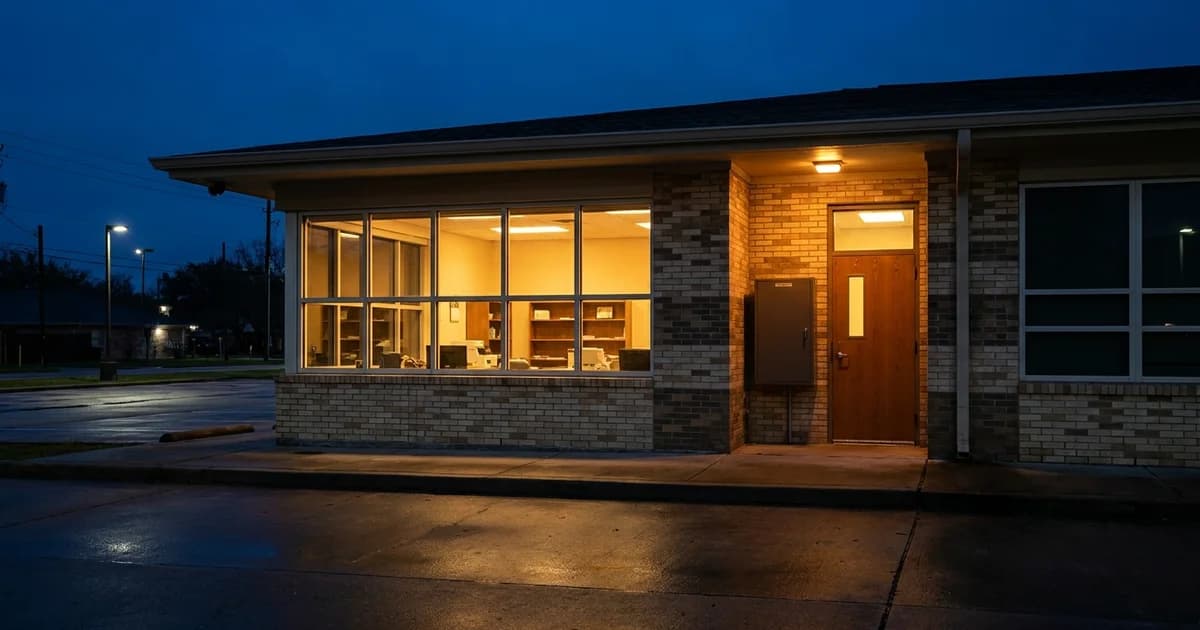
Battery Backup for Houston Private and Charter Schools
When a big Houston district loses power, a facilities department, a communications office and a superintendent all start working the problem. An independent campus has none of that. At a private school or a charter campus, the head of school or the principal is often the one deciding whether the building opens, who calls the parents, and what happens to the cafeteria walk-in. This guide covers what a long outage actually means for a campus, which rules apply and which do not, and what a battery system can honestly protect.
Key Takeaways
- CenterPoint reported more than 2.26 million customers without power at the peak of Hurricane Beryl in 2024 (Utility Dive).
- Charter schools answer to TEA attendance rules. Private schools mostly do not, so the pressure is parents and tuition, not the state.
- Whole-campus air conditioning is out of reach for battery backup. Protect an essential zone: office, communications, security and a few rooms.
Why Is an Independent Campus Exposed in a Houston Outage?
In July 2024, Hurricane Beryl left more than 2.26 million CenterPoint customers without power, and the utility described it as the largest outage in its history (ABC13, 2024). Schools were not spared. Galena Park ISD kept campuses closed through July 12 because so many homes and district facilities had no power (FOX 26 Houston, 2024).
Those were public districts, with central offices to manage the response. A private school or a stand-alone charter campus has a smaller team, often one building, and no central office to lean on. The decision to close, the parent communication and the building safety checks all land on the same few people.
That is the angle of this post. It is not about whether outages happen in Houston. It is about who owns the problem when the school is an independent organization.
Which Rules Apply to Charter Schools and Which to Private Schools?
Charter schools and private schools sit under very different rules, and mixing them up leads to bad planning. Open-enrollment charters are public schools, so TEA attendance accounting applies. Private schools are largely outside TEA oversight, which changes what an outage costs them.
Charter schools: TEA make-up days and waivers
TEA states that the first two missed days, whatever the cause, must be made up with designated make-up days or additional instructional minutes. After that, a charter or district can request a missed-school-day waiver for weather, health or safety closures (Texas Education Agency, State Waiver Types: Attendance, retrieved 2026-10-06). TEA also tells charters to submit those requests soon after the missed day so funding calendars stay accurate.
So for a charter, a multi-day outage is a calendar and funding problem as well as an operations one. A campus that can reopen its office and a few rooms sooner has fewer lost days to explain.
Private schools: no TEA minutes, but real pressure
Texas does not regulate private schools the way it regulates public ones. One summary of Texas law notes there is no TEA approval process and that schools may operate without state certification, with the legal floor being a bona fide educational program (Texapedia). That means the state minute-count and make-up-day rules described above are not the driver for a private campus.
I could not find a public Texas rule that sets a disaster make-up requirement for private schools, so I am not going to invent one. If your school is accredited, your accrediting body or your enrollment contract may set its own expectations. Check those documents rather than assuming.
What private schools do face is tuition parents who expect a functioning building, and a head of school who has to explain a closed week.
What Can Battery Backup Realistically Protect on a Campus?
Battery backup is a good fit for a small, critical load and a poor fit for a whole building. A campus with dozens of rooms and rooftop air conditioning units draws far more power than a home battery system is built to carry. The honest plan is to choose an essential zone and wire it to the backup panel.
Start with the essential zone
Good candidates, in rough order of value:
- Front office and communications. Phones, internet, the parent notification system, and the computer that holds attendance and emergency contact records.
- Security and access control. Cameras, door controllers, and the visitor check-in point.
- Lighting for hallways and the office wing.
- One or two rooms with a mini-split or window unit. A cool room for a nurse's station, or a place to hold students if a parent pickup stretches into the afternoon.
- A refrigerator for medications and staff food.
Be clear on what stays off
Whole-campus air conditioning, large kitchen equipment, shop and lab equipment, and any gym loads should not be on the backup panel. That is not a limitation to hide. It is the reason a right-sized system is affordable at all.
What about the fire alarm?
Fire alarm control units already carry their own standby batteries. NFPA 72 calls for a secondary supply that can run the system in a quiet state for at least 24 hours, then sound notification appliances for five minutes (Security Sales & Integration, 2024). A battery system does not replace that equipment or your annual testing. Ask your alarm vendor to confirm your batteries are tested and current, since a multi-day outage outlasts them.
How Much Cafeteria Food Is at Risk?
Cold food is the most time-sensitive loss on a campus. Federal food safety guidance says a closed refrigerator keeps food safe for about four hours, a full freezer for 48 hours, and a half-full freezer for 24 (FoodSafety.gov). Texas food rules set cold holding for temperature-controlled foods at 41 degrees Fahrenheit or below (Texas DSHS).
If your campus has a permitted kitchen, that matters in practice. After a long outage, a walk-in that drifted above 41 degrees can mean discarding a day's worth of prepared food. I did not find a public source that lists exactly which Texas rules apply to a private school cafeteria versus a catered program, so confirm your own permit status with your local health authority.
A single refrigerated unit is a manageable load for a battery. A full commercial kitchen is not. Many independent schools choose to put the walk-in compressor, or a smaller reach-in, on backup and leave cooking equipment off.
What Does a Right-Sized System Look Like?
Eos systems are built around a 9 kWh battery module with about 8.76 kWh usable, and a controller rated for 11.5 kW continuous and 17.1 kW surge. Those are the figures on the plans page. Runtime is simple arithmetic: usable kWh divided by the load you put on backup.
An illustration, not a quote
Here is a composite example. It does not describe any real school.
A small independent K-8 campus in the Houston area, around 200 students, picks its office wing as the essential zone. The load is the front office computers and network gear, cameras and door controllers, hallway lighting, a medication refrigerator, and one mini-split in the nurse's room. Assume that adds up to roughly 3 kW when everything runs.
One module with 8.76 kWh usable would carry 3 kW for a little under three hours. Two modules, at 17.52 kWh usable, would stretch that to nearly six hours. Cutting the load to 1.5 kW by leaving the mini-split off at night roughly doubles each figure.
Those are my illustrative assumptions. A real campus needs a load survey of the panel, and the right answer depends on what you choose to protect. The goal is a clear picture of the hours you are buying, not a promise.
Where this fits among other commercial buildings
Schools share patterns with other community buildings. If your campus also hosts evening events or a shared worship space, see our guide for churches and places of worship. If child care is part of your program, the daycare guide covers licensing and infant heat risk, which is a separate issue from the school-day questions here. For the administrative side, the office building guide is a close match, and our overview of commercial battery backup in Texas covers the basics.
How Should a School Leader Start?
Start small and write it down. A one-page continuity plan beats a large purchase made in a hurry. The steps below take a few hours, not weeks.
- List your five must-run functions. Communications, security, a cool room, medication storage and cold food are common.
- Find them on the electrical panel. Your facilities contractor or electrician can label which breakers feed each function.
- Decide the closing rule. Write down when you close and who makes the call. That decision should not be improvised at 6 a.m.
- Check your lease. Many charter campuses rent their buildings, and a landlord may need to approve electrical work.
- Ask for a load survey. An installer can measure the essential zone and give you an honest runtime.
A battery system is one tool in a continuity plan, not the plan itself. Notification lists, a pickup protocol and a clear chain of command matter just as much.
Or call Eos at 833-989-3737 to talk through your setup with an installer.
Frequently Asked Questions
Do Texas private schools have to make up days lost to an outage?
Not under the TEA rules that bind public and charter schools. Texas law sets only a bona fide education standard for private schools (Texapedia). Your accreditor, enrollment contract or handbook may set its own expectations, so check those documents.
Do charter schools have to make up days lost to an outage?
Yes, at least at first. TEA says the first two missed days must be made up, and further closures can be handled through a waiver request (TEA). Charters should submit waiver requests promptly after the missed day.
Can battery backup run a whole school?
No, not realistically. A full campus with rooftop air conditioning and a commercial kitchen draws far more than a battery system is sized for. A protected essential zone is the practical approach, and it is also what makes the system affordable.
Will a battery replace my fire alarm batteries?
No. Fire alarm panels carry their own secondary power, and NFPA 72 sets a 24-hour minimum for quiet-state operation (Security Sales & Integration). Keep those batteries tested and replaced on schedule. A backup system adds resilience to the rest of the zone.
How long do outages last in Houston?
It varies widely. After Beryl, CenterPoint expected to restore about 80 percent of affected customers by the end of Sunday, July 14, six days after landfall (ABC13, 2024). Most outages are far shorter, so plan for both a few hours and several days.
What does the charter school facility situation mean for installation?
Charter campuses often lease their buildings, so confirm with your landlord before any electrical work (Texapedia). Private schools that own their buildings can usually decide on their own board's timeline.