Battery Backup Installation in Houston: What to Expect (Step-by-Step)

Battery Backup Installation in Houston: What to Expect (Step-by-Step)
Texas had 263 major grid outages from 2019 to 2023, the highest count of any state in the country (Governing.com / DOE data, 2024). In 2023 alone, the average Texas residential customer lost 496 minutes of power (EIA via CandysDirt, 2025). Those aren't statistics from a distant disaster. They're the reality for Houston homeowners every storm season. Here's the part most people don't expect: the physical installation of a home battery backup takes one day. The wait comes from permits and CenterPoint Energy paperwork, which stretches 3 to 6 weeks. This guide walks through every stage, from sizing your system to the moment it goes live.
[INTERNAL-LINK: explore Eos battery backup plans for Houston homeowners → /plans]
Key Takeaways
- Texas had 263 major grid outages from 2019 to 2023, the highest of any state (Governing.com, 2024). The average Houston-area home lost 496 minutes of power in 2023 (EIA).
- The physical installation takes one day on-site. The full process, including permits and CenterPoint Energy approval, runs 3 to 6 weeks.
- Average installed cost in Texas: $17,472 for a 13 kWh system, ranging from $14,851 to $20,093 (EnergySage, April 2026).
- Your installer files all permits and CenterPoint paperwork. You just need to be home on installation day.
What Does a Home Battery Backup System Actually Do?
A home battery backup stores electricity from the grid, or from solar panels if you have them, and releases it automatically the moment power goes out. No generator to start. No fuel to buy. No startup delay. The system switches in 20 milliseconds or less, which is fast enough that your refrigerator, computer, and medical devices don't even register the transition (WattBuild, 2024).
That's the critical difference from a generator. Generators require manual startup, produce exhaust, and need regular fuel and maintenance. A battery system is silent, automatic, and has no moving parts to service.
It's also different from a UPS. A UPS (uninterruptible power supply) protects a single device, like a desktop computer. A home battery backup protects an entire circuit or your whole house. The scale is entirely different.
Solar panels are optional. Plenty of Houston homeowners install battery backup without any solar at all. The battery charges from the grid overnight when rates are lower, then discharges during an outage. Solar can extend that runtime by recharging the battery during a daytime outage, but it's not a requirement for the system to work.
Citation capsule: Home battery systems switch to backup power in 20 milliseconds or less, fast enough that sensitive electronics including computers, medical devices, and smart home hubs don't register the interruption (WattBuild, 2024). That response time is what separates a battery from a generator for households with medical equipment.
[INTERNAL-LINK: battery vs. generator comparison → /learn/battery-vs-generator]
How Do You Size a Battery for a Houston Home?
Sizing a home battery for Houston is different from sizing one anywhere else in the country. A central air conditioner in a 2,000 to 3,000 square foot home draws 3 to 5 kW per hour, the dominant variable in any backup calculation (EnergySage, 2024). A whole-home recommendation that works in Chicago may only cover your essential circuits in Houston in July.
You have two basic approaches: protect your essential circuits, or back up the whole house. A reputable installer conducts a load audit before recommending anything.
Our finding: A sizing formula built for the national average will undersize your system for Houston's summer. Always ask your installer to calculate AC runtime explicitly for your specific unit, not just square footage.
Essential Circuits vs. Whole-Home Backup
Essential circuits cover the basics: refrigerator, lights, internet router, phone charging, and any medical devices. A 9 kWh system handles this load for 6 hours or more. It's the starting point for most Houston homeowners who want reliable, affordable protection.
Whole-home backup adds central AC, an electric oven, and potentially an EV charger. That's a much heavier load, and Texas summers make it the right choice for many families. Hurricane Beryl in July 2024 knocked out power for 2.6 million Texas customers (EIA, 2025). A multi-day summer outage without AC isn't just uncomfortable. For elderly residents and young children, it's a health risk. Multi-day outages like Beryl make the case for whole-home sizing.
[INTERNAL-LINK: view system specifications and kWh options → /specifications]
[INTERNAL-LINK: compare battery backup plans → /plans]
What Permits and Utility Approvals Does Houston Require?
Every grid-tied home battery installation in Houston requires two approvals before the system goes live: a City of Houston electrical permit and a CenterPoint Energy Distributed Generation (DG) interconnection application. Your installer files both. You don't deal with either office directly.
The City of Houston electrical permit is filed by your installer and typically approved in 5 to 15 business days. That's the faster of the two steps.
The CenterPoint Energy DG application is the one that stretches the timeline. CenterPoint does not publish a fixed review period. In practice, plan for 2 to 6 weeks from submission to Permission to Operate (CenterPoint Energy DG FAQ). This is the stage most homeowners don't anticipate, and it's the most common reason a project that looked simple takes longer than expected.
Off-grid installs, meaning fully islanded systems that never connect to CenterPoint's grid, skip the DG application. But they require a different panel configuration and can't charge from the grid at all.
After the physical installation is complete, a city inspector visits the property before the system goes live. Scheduling that inspection can add a few days to the end of the timeline.
Before you sign a contract, ask your installer directly: do they handle permits and the CenterPoint DG application as part of their scope? A reputable installer says yes without hesitation.
Citation capsule: CenterPoint Energy's Distributed Generation interconnection review has no published fixed timeline. Houston homeowners should plan for 2 to 6 weeks from submission to Permission to Operate (CenterPoint Energy DG FAQ). This approval, not the physical installation, is the longest stage in most residential battery backup projects.
What Happens on Installation Day?
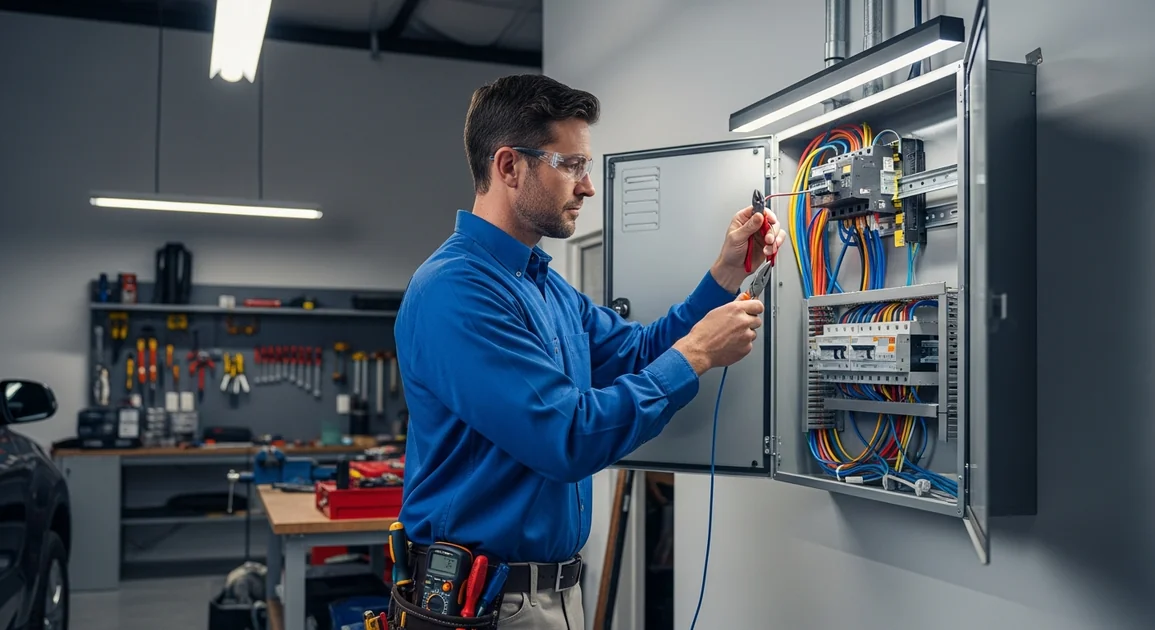
For most residential Houston installations, the crew arrives in the morning and the system is physically installed and commissioned by end of day. Battery-only systems, meaning no solar, typically complete in one day (Good Energy Solutions, 2024). Solar-plus-battery installs can run 2 to 5 days depending on roof complexity.
Here's how that day breaks down.
Step 1: Site walkthrough. The crew confirms battery placement. Garage wall, utility room, and outside wall are the three common options for Houston homes.
Step 2: Electrical panel work. The crew installs a critical load subpanel. This is the most time-intensive part of the job. Some older Houston homes also need a main panel upgrade if the existing capacity is already at its limit. Your installer should identify this during the site assessment, not on installation day.
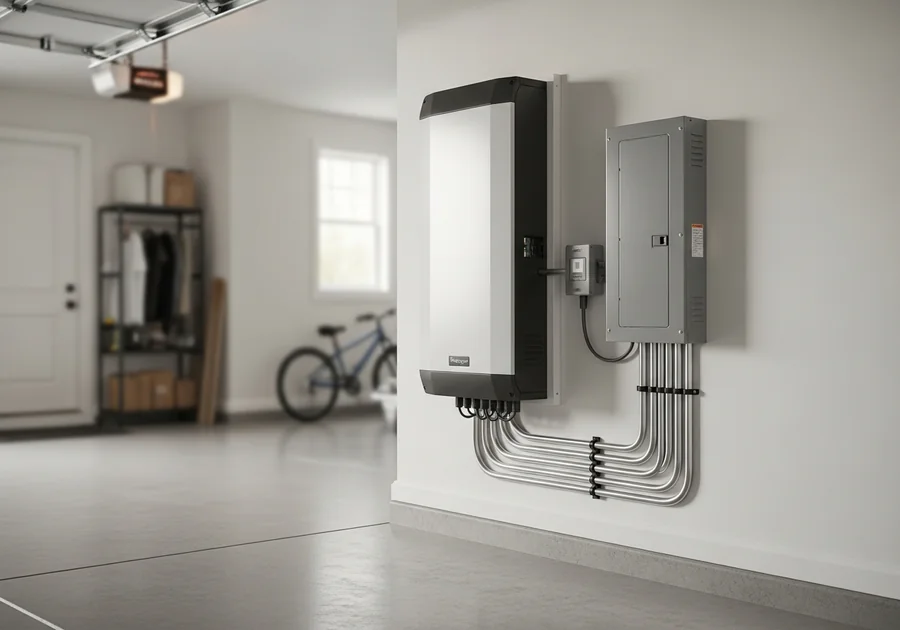
Step 3: Battery mounting. Wall-mount is most common in Houston garages. Floor-mount configurations are available for larger multi-unit systems.
Step 4: Inverter and wiring. The crew connects the battery, the subpanel, and the grid meter. This is where the system becomes a single integrated unit.
Step 5: Commissioning. The installer configures backup thresholds, tests the automatic transfer switch, and walks you through the monitoring app on your phone.
Your role on installation day is simple: be home, clear access to the electrical panel, and keep pets and children away from the work area.
Where Will the Battery Be Installed?
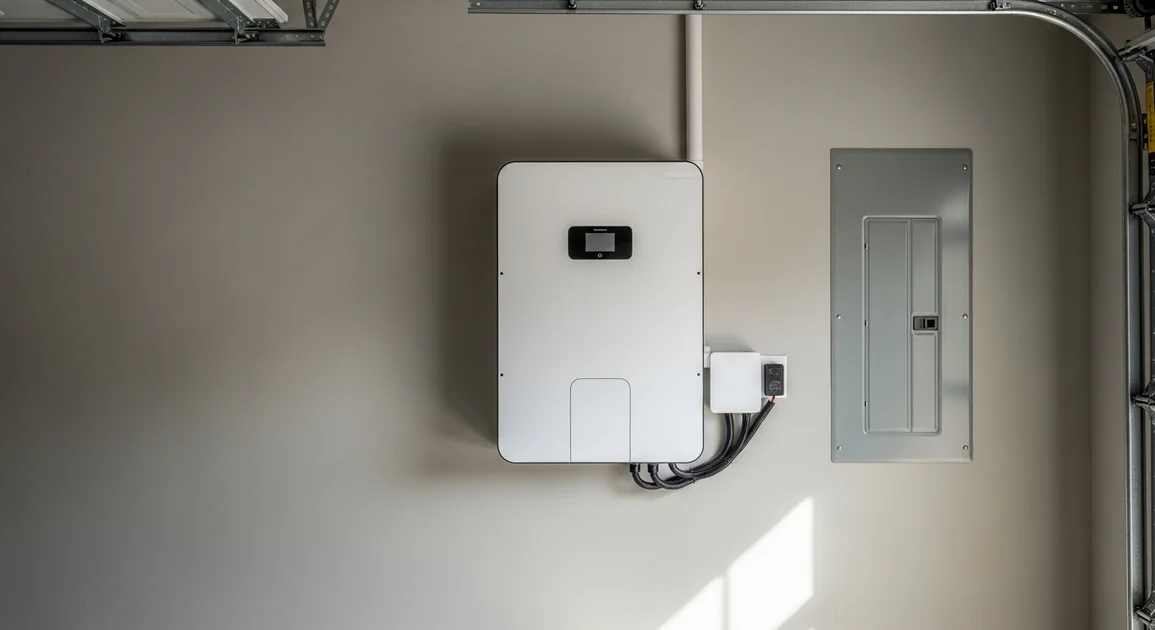
The garage is the most common location in Houston homes. It protects the unit from humidity and outdoor heat while keeping it accessible for any future service.
Outdoor installations are possible, but they require an enclosure rated specifically for Texas heat and humidity. If you have a visible exterior wall as the only option, check your HOA rules before committing. Some subdivisions restrict equipment on certain elevations.
Our finding: In our experience installing systems across the Houston metro, the electrical panel is the biggest variable on installation day. Homes with older 100-amp panels or panels already at full capacity add time and cost to any installation. We identify this during the site assessment so there are no surprises on installation day.
Citation capsule: Battery-only home backup installations, meaning no solar, typically complete in a single day on-site (Good Energy Solutions, 2024). The variable that most often extends that timeline is the electrical panel. Older 100-amp panels or fully loaded panels require upgrades that add hours and cost.
How Long Does the Full Process Take, Start to Finish?
From your first call to a live system, plan for 3 to 6 weeks in the Houston metro area. Most of that time is paperwork. The physical installation is one day. The inspection scheduling backlog is typically the last bottleneck before go-live.
Here's what each week looks like in practice:
- Week 1: Consultation, site assessment, load audit, proposal, contract signing.
- Weeks 2 to 4: Permit filing with City of Houston, CenterPoint DG application submitted, equipment ordered.
- Week 4 to 5: Installation day. One day on-site for battery-only systems.
- Weeks 5 to 6: City inspection, CenterPoint Permission to Operate issued, system goes live.
Every stage overlaps a little. Equipment ordering often starts the same week as permit filing. But CenterPoint's review queue doesn't move faster because you're ready on your end. It runs on its own schedule.
[INTERNAL-LINK: see if your home qualifies for a free site assessment → /home-backup-planner]
What Does Battery Backup Installation Cost in Houston?
The average installed cost of a home battery system in Texas is $17,472 for a 13 kWh system ($1,344 per kWh), with a range of $14,851 to $20,093 (EnergySage Marketplace data, April 2026). That's the all-in number: equipment, inverter, labor, permits, and standard electrical work.
Equipment accounts for 40 to 60% of the total. Labor, permits, and subpanel work make up the rest. That subpanel work is worth asking about specifically. A critical load subpanel is a common cost driver that generic online estimates often leave out entirely. Ask any installer upfront whether it's included in their quote before you compare numbers.
Smaller essential-circuit systems sit at the lower end of that range. Whole-home multi-battery configurations push past $20,000. That's not a surprise if you've done the sizing conversation first.
One comparison to avoid: don't stack a solar-plus-battery quote against a battery-only quote. They're different projects with different scopes. Get at least two itemized quotes and compare them line by line, not just the bottom number.
Citation capsule: The average installed cost of a home battery system in Texas is $17,472 for a 13 kWh system, ranging from $14,851 to $20,093 (EnergySage Marketplace data, April 2026). The spread reflects differences in panel work, inverter type, and system size. Quotes that omit critical load subpanel installation often look cheaper until the change order arrives.
[INTERNAL-LINK: detailed cost breakdown for Texas homeowners → /learn/cost-of-home-battery]
Frequently Asked Questions
Do I need solar panels to install a home battery backup in Houston?
No. A battery backup system charges from the grid and works independently of solar. Solar panels can extend how long you run during a daytime outage by recharging the battery as it depletes, but they're not required for the system to function.
How long will a home battery backup power my house during an outage?
It depends on system size and what you're running. A 13 kWh system on essential circuits, refrigerator, lights, and internet, can last roughly 8 to 9 hours at a 1.5 kWh/h baseline. Run your central AC and that drops significantly: a 3-ton AC draws 3 to 5 kW, so plan accordingly (EnergySage, 2024).
[INTERNAL-LINK: how to size your home battery system → /specifications]
Can a home battery backup run my central air conditioning?
Yes, if the system is properly sized. Central AC is the largest load in a Texas home, and sizing for it is the most important conversation to have with your installer before you commit to a system. Don't skip that conversation.
What happens if my installation fails the city inspection?
Your installer is responsible for any corrections. Before you sign a contract, ask whether re-inspection is included in scope. Reputable installers include it automatically. It's a simple question that tells you a lot about the contractor.
[INTERNAL-LINK: what to ask a battery backup installer → /learn/how-to-choose-home-battery]
You're Three to Six Weeks Away from a Live System
The installation itself is one day. The full timeline is 3 to 6 weeks, and most of that time is CenterPoint interconnection review and city permit processing. Not the crew's schedule.
Size for Houston's summer AC load, not a national average. Get itemized quotes that break out subpanel work. And don't let a long-timeline quote surprise you. It's not the installer moving slowly. It's the approval process.
The best next step is a site assessment. A qualified installer visits your home, reviews your electrical panel, assesses your load, and gives you a proposal before you commit to anything. No obligation, no guesswork.
[INTERNAL-LINK: get your free assessment scheduled → /home-backup-planner]
[INTERNAL-LINK: how to choose the right home battery system → /learn/how-to-choose-home-battery]