Whole-Home Battery vs Portable Power Station in Texas: Which Backup Fits Your Home

Whole-Home Battery vs Portable Power Station in Texas: Which Backup Fits Your Home
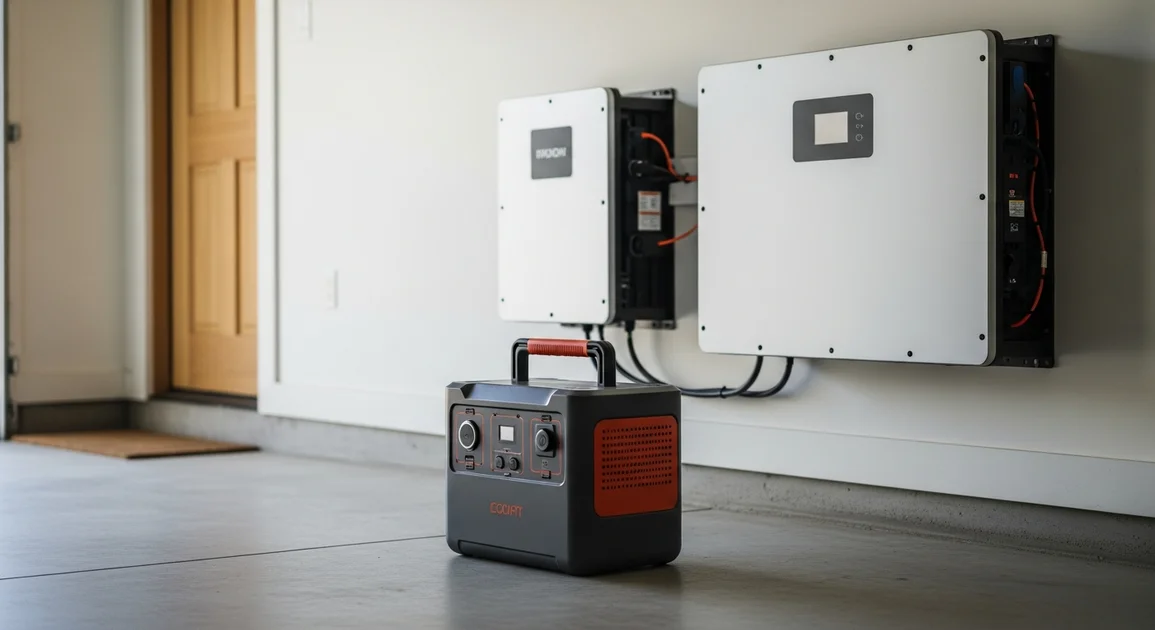
Both a portable power station and a whole-home battery keep the lights on when the grid fails, but they solve different problems. A portable station is a plug-and-play box you can carry, ideal for renters, apartments, a few devices, or camping. A whole-home battery is hardwired to your panel and takes over automatically when the power goes out. Modern portables are genuinely capable, so the real question is scope: a few circuits you manage, or the whole house on autopilot.
Key Takeaways
- A flagship portable like the EcoFlow Delta Pro 3 holds 4.1 kWh and outputs 4,000 W, expanding to 48 kWh with add-on batteries (EcoFlow, 2026).
- Portables back up selected circuits, not the whole panel. EcoFlow's Smart Home Panel 2 covers up to 12 assigned circuits with automatic switchover (EcoFlow, 2026).
- A whole-home Eos system is hardwired to your main panel and switches over automatically, with 9 to 45 kWh and 11.5 kW of continuous power.
- Portables win for renters, apartments, budgets, and portability. Whole-home wins for hands-off, whole-house outage protection.
- Hurricane Beryl left about 2.2 million Houston-area customers without power in 2024, often for days (Houston Public Media).
[INTERNAL-LINK: see whole-home options for your Houston home → /home-backup-planner?source=blog&slug=whole-home-battery-vs-portable-power-station-texas]
How do the two categories differ?
The core differences are installation, transfer, and scope. A portable power station arrives ready to use: you plug appliances into it, or connect it to a transfer switch, with no permit and no electrician. A whole-home battery is installed on your electrical panel by a licensed team, permitted, and permanent. That install is the price of a system that runs the house without you touching it.
Transfer is the other divide. Portables can add automatic switchover through a smart panel, but only for the circuits you assign to it, up to 12 on EcoFlow's Smart Home Panel 2 (EcoFlow, 2026). A hardwired whole-home battery is designed to back the entire main panel automatically. The chart shows how single-unit capacities compare before any expansion.
On cost and capacity, the two overlap more than the chart suggests. Portables expand impressively, with the Delta Pro 3 reaching 48 kWh and the Anker SOLIX F3800 up to 53.8 kWh with add-on batteries (EcoFlow, 2026; Anker, 2026). At that point you are spending whole-home money on a stack of portable units, without hardwired whole-panel automation. A whole-home battery front-loads the install but usually delivers a lower cost per usable kilowatt-hour at higher capacities, plus permanent panel integration.
There is also a day-to-day difference. A portable is something you set up, recharge, and manage during an outage. A whole-home system runs itself, recharging from the grid automatically once power returns, with nothing to move or plug in.
When a portable power station is the right choice
A portable station is the better tool in plenty of cases, and it is worth being clear about that. If you rent, live in an apartment, or cannot modify the electrical panel, a portable needs no permission and moves with you. If you want to cover a fridge, a few devices, a CPAP, and some lights rather than the whole house, a single unit does that well and costs far less to start.
Portables also shine off the grid, for camping, tailgates, or a job site, where a permanent battery makes no sense. And because they are plug-and-play, you can have one working the day it arrives.
They expand further than many people expect, too. Stacked with extra batteries, a portable system can approach the capacity of a small whole-home bank, which makes it a flexible path for someone who wants to start with essentials and grow over time rather than commit to an install right away.
When a whole-home battery is the right choice
A whole-home battery is the better fit when you want the entire house protected without lifting a finger. It carries far more capacity out of the box, 9 to 45 kWh, powers heavy loads like central air with 11.5 kW of continuous output, and switches over automatically across your whole panel, not just a handful of circuits. When we install one for a Houston family, the goal is that an outage becomes a non-event, even at 3 a.m.
It is the right call for homeowners planning to stay, who want multi-day coverage and a permanent, silent system rather than a box to wheel out and wire up each time. It is also covered by a 10-year warranty and mounts out of the way, so it becomes part of the house rather than equipment you store and maintain.
Texas summers make the case sharper. Running central air through a daytime outage takes both sustained kilowatts and a large energy reserve, more than a single portable can supply for long. A whole-home system is sized for exactly that load, which is why it holds up across a multi-day heat event.
[INTERNAL-LINK: compare whole-home plans and capacities → /plans]
The Houston reality: multi-day outages and automatic transfer
Houston's outages make the transfer question concrete. Hurricane Beryl cut power to about 2.2 million customers in 2024, many for days (Houston Public Media). During a multi-day outage, a portable means managing what is plugged in, recharging it, and being awake to react. A whole-home system simply keeps the house running.
For a homeowner who has spent a long outage rationing a portable's charge and shuffling extension cords, the appeal of a system that carries the whole house on its own is easy to understand. That is the line most people cross after living through their first multi-day event.
That hands-off, whole-panel behavior is the practical reason many Houston homeowners move up from a portable once they have lived through a long outage. For a ranked look at every backup option, see our guide to the [INTERNAL-LINK: best power outage backup solutions for Houston → /blog/best-power-outage-backup-solutions-houston].
[INTERNAL-LINK: talk to a local installer about whole-home backup → /home-backup-planner?source=blog&slug=whole-home-battery-vs-portable-power-station-texas]
Prefer to talk it through? Call Eos at 713-207-2222 for a same-week Houston site survey.
Frequently asked questions
Can a portable power station run my whole house?
Generally no, not the entire panel at once. With a smart panel it can automatically back up selected essential circuits, up to 12 on EcoFlow's Smart Home Panel 2 (EcoFlow, 2026). A hardwired whole-home battery is designed to back the whole main panel.
Does a portable switch on automatically like a whole-home battery?
Only if you add a compatible smart panel or transfer switch, and only for the circuits you assign to it. A whole-home battery switches over automatically across the entire panel with no setup on your part during an outage.
Which is cheaper?
A portable is far cheaper to start, often a couple thousand dollars for a flagship unit (EcoFlow, 2026). A whole-home system costs more because it includes far more capacity and a permanent, permitted install. The right value depends on whether you need a few circuits or the whole house.
How long does each last during an outage?
A single portable holds about 3.8 to 4.1 kWh, enough for essentials for several hours to a day. A whole-home system holds 9 to 45 kWh and can run essentials for days. Both extend with more batteries.
Can I use a portable while I decide on whole-home?
Yes, and many people do. A portable is a sensible stopgap for essentials, and you can move up to a whole-home system later when you are ready to protect the entire house.
This article compares portable power stations and whole-home batteries for Texas homeowners and reflects publicly available product specs and Eos specifications as of July 2026. Portable prices vary by promotion; confirm current specs and pricing with each manufacturer.