Leaving Town for the Holidays? What Your Home Battery Does While You're Away

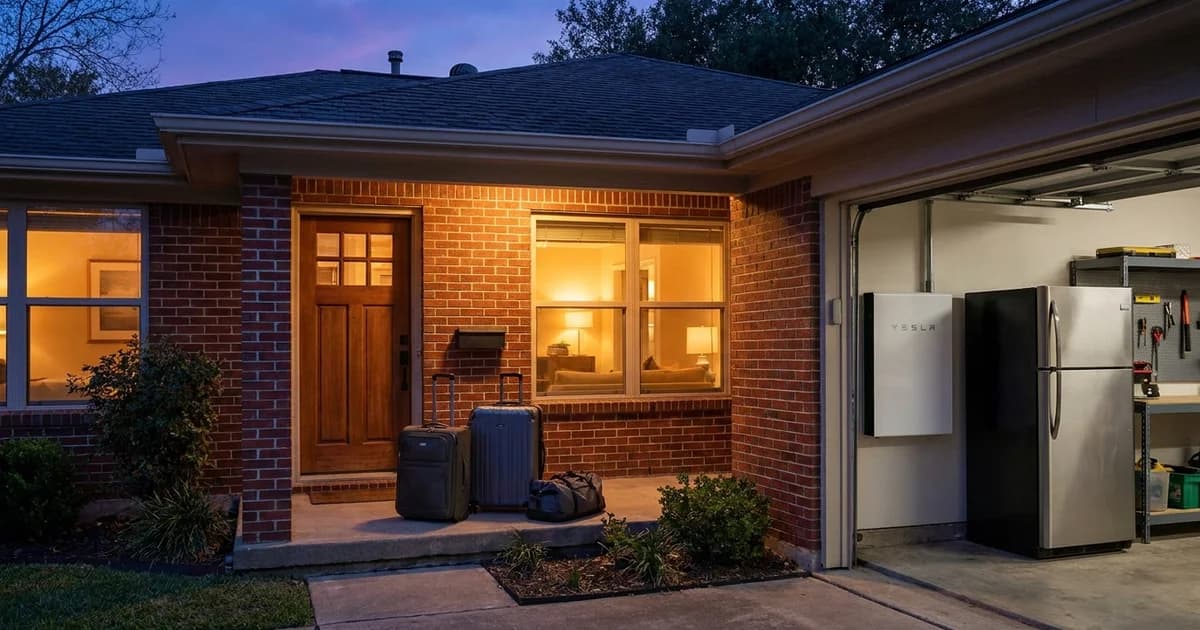
An outage while you're home is an inconvenience. An outage while you're 800 miles away is a different problem, because nobody is there to open the freezer, check a thermostat or notice that the garage sump pump went quiet. If you travel over Thanksgiving or Christmas, the question is not whether a battery is nice to have. It is what, exactly, it protects while the house is empty.
This post is about that question. It covers which loads keep running, why food and plumbing are the real exposures, what a battery cannot do, and what to check before you lock the door. Where I could not verify a number, I say so instead of guessing.
Key Takeaways
- An empty house still draws power: refrigerator, freezer, sump pump, router and cameras are the loads worth protecting.
- USDA says a refrigerator keeps food safe for about 4 hours without power, and a full freezer for about 48 (USDA FSIS). Nobody home means nobody to act on that clock.
- Texas guidance for leaving the house in cold weather: keep the heat on, no lower than 55°F, or shut off and drain the water (Red Cross, TDI).
- A battery buys time, not forever. Capacity is finite, so set a reserve and plan for someone to check in.
What keeps running in an empty house?
More than people expect. Even with every light off, a house is still doing work. The refrigerator and any chest freezer cycle all day. A sump pump or a drainage pump waits for water. The router stays on so cameras and doorbell can talk to your phone. A thermostat keeps the system ready. Smart locks, garage openers and alarm panels sip a little power continuously.
I'm not going to give you a single "away load" figure in watts. It depends on your fridge, your freezer and what else is plugged in, and I couldn't find a public source that gives a typical number I'd trust. The practical step is to read the nameplates on the two appliances that matter and add up what is left on. Our appliance wattage chart is a place to start.
The useful part is the shape of the load. An empty house runs a small, steady base load, not the big spikes of a full holiday weekend. That is good for a battery, because a small base load stretches stored energy a long way. Each Eos battery module is 9 kWh nominal (8.76 kWh usable), and all plans share one controller rated for 11.5 kW continuous. Away, you are nowhere near that kW limit. The question becomes how many hours of base load your capacity covers.
Why does an outage hit harder when nobody is home?
Because the usual human fixes disappear. Three exposures matter most.
Food. USDA FSIS says a refrigerator keeps food safe for about 4 hours without power if the door stays closed, and a full freezer for about 48 hours (about 24 if half full). It tells you to discard perishable items such as meat, poultry, fish, eggs, milk and leftovers after the 4 hour mark (USDA FSIS). When you're home, you move food to a cooler or toss it. When you're away for a week, the first you hear of it is a smell. Our guide on how long food lasts in the fridge without power goes through the spoilage side, and the deep freezer guide covers holiday bulk buying.
Water. Houston winters are usually mild, but freezes happen, and a house with no power may also have no heat. The Texas Department of Insurance advises that if you leave the house before a freeze, you should turn off the water at the shutoff valve and leave the heat on, and it notes that flood insurance does not cover burst pipes, so check your homeowners policy (TDI). The Red Cross Texas guidance says to leave the heat on no lower than 55°F when you go away in cold weather (Red Cross). The Texas Division of Emergency Management offers two options: have someone check the house daily to confirm the heat is still on, or drain and shut off the water system (Texas DPS/TDEM).
I'll be direct about the limit here. A battery can keep a gas furnace blower or a heat pump running for some hours. It does not guarantee heat for days, and electric resistance heat is a big load. Our heat pump and electric heat winter outage post shows how fast that load eats capacity.
Flooding and security. A Houston storm often brings rain and an outage together. If you have a pump that keeps water out of a crawlspace or a low entry, it needs power while you are gone. See our sump pump guide. Cameras and alarms are the other piece; the security camera and alarm guide explains what to put on backed-up circuits.
What does a battery protect, and what can it not do?
A battery protects the circuits you chose to back up, for as long as its stored energy lasts. That is the honest summary. Here is the split I use when talking to a customer who travels.
Good fit for a battery while you're away:
- Refrigerator and chest freezer, which are the easiest wins and the most expensive things to lose.
- A sump or drainage pump.
- Router and modem, so cameras, doorbell and monitoring stay online.
- Lights on a timer and the alarm panel.
What a battery cannot fix:
- A long outage. Capacity runs out. If the grid is down for longer than your stored energy covers, loads stop. Our post on what happens when a home battery runs out mid-outage explains the reserve floor and what the system does at the bottom.
- A dead internet line. If the storm takes down your cable or fiber, the battery keeps running but your phone may go blind. Some setups support a cellular fallback; our Wi-Fi and remote monitoring guide covers it.
- A water leak, a failed pump or a broken door. Power is one risk among several.
Solar does not change this much. With panels and a battery, daytime production can recharge storage during a multi-day outage if the system is set up to island. Our post on adding a battery when you already have solar in Texas goes through what depends on your inverter. I would not assume your existing system does this without checking.
How should you set the battery before you leave?
I can speak to this in general terms, because apps differ between manufacturers and I'm not going to claim a specific "vacation mode" button exists in yours. Most home battery apps let you set a backup reserve, which is a percentage of stored energy held back for an outage so daily use never drains it. Many also send push notifications for faults and grid events. Our monitoring setup guide walks through those settings and the four readouts worth knowing: state of charge, load, grid status and event log.
For a trip, the reasoning is simple:
- Raise the reserve. While away, you want a full battery waiting, not one that has been cycled down by daily use. A higher floor means more hours if the grid drops.
- Turn on notifications. An alert that grid status changed is worth more when you're traveling than when you're home.
- Confirm the gateway is online. A battery that has quietly dropped Wi-Fi gives you no alert and no remote view. Open the app and check that it shows live data before you leave.
- Confirm your installer can see faults, if you've allowed remote diagnostics. That is opt-in. Ask yours how it works.
Check the exact setting names in your own app, since I can't verify them for every brand. If you are an Eos customer, call us and we'll walk you through yours.
A short checklist before you leave
Work through this the week before you travel, not the night before.
- Fridge and freezer: put an appliance thermometer in each. This lets you check temperatures when you return, and FSIS's discard advice depends on how long food sat above 40°F. Clear out anything perishable you won't eat before you go.
- Battery app: confirm live state of charge, set the reserve higher, turn on notifications.
- Internet: check the gateway is online. If your router is on a backed-up circuit, good. If it isn't, know that monitoring may drop in an outage.
- Heat: if a freeze is in the forecast, leave the heat on at 55°F or higher, or shut off and drain the water, per the Texas guidance above.
- Water shutoff: find the main shutoff valve before you need it. TDI's advice to shut off water at the valve only works if you can find it fast.
- Sump or drainage pump: test it and confirm it is on a backed-up circuit.
- Someone local: give a neighbor or friend a key, the app's phone number for your installer and permission to open the freezer only if there's an issue. TDEM's own advice is to have someone check the home daily when you're away in cold weather.
- Insurance: read your homeowners policy on burst pipes and spoiled food. Don't assume.
- Timers: lights on a timer are fine on a backed-up circuit and draw very little.
If your battery supports it, run a short self-test first. Our monthly self-test checklist is a good routine to do before any long trip.
Do you need a bigger system if you travel a lot?
Not necessarily. Away, your load is lower, so a smaller system stretches further than it does for a full house. What changes is how long you might be gone before someone can respond. If you are away for two weeks and nobody can check in, a bigger battery buys more hours, but a neighbor with a key buys more safety per dollar. If your second property sits empty for months, such as a beach house, read our Freeport and Surfside vacation home guide, which covers elevation, salt air and Gulf storm risk.
Pick the loads you can't lose, then size for them. Our planner asks the questions that decide it.
What to do next
Before you book the car, write down three things: what's on your backed-up circuits, what your reserve is set to, and who has a key. That ten-minute exercise catches most of what goes wrong while you're away.
Or call Eos at 833-989-3737 to talk through your setup with an installer.
Frequently asked questions
Will my fridge stay on if the power goes out while I'm on vacation?
If the fridge is on a backed-up circuit and the battery has charge, yes, until the stored energy runs out. Without a battery, USDA says a closed refrigerator keeps food safe for about 4 hours and a full freezer for about 48 (USDA FSIS).
Should I turn the heat off when I leave town in winter?
In cold weather, no. The Red Cross Texas guidance says to keep it no lower than 55°F (Red Cross). The other option from TDI is to shut off the water at the valve and leave the heat on (TDI). In mild weather this matters much less.
Can I check my battery from another city?
Usually, if the gateway is online and you have the manufacturer's app. If your home internet goes down in the storm, you may lose the view unless the system has a cellular fallback. The battery keeps running either way. Our monitoring guide explains the difference.
Does a bigger battery matter more when I'm away?
Capacity sets how long you're covered, so it matters when no one can respond. But away load is low, and a neighbor who can check in is worth a lot. Size for the circuits you can't lose, then add a person.
Does a battery help if my house is empty for weeks?
Yes for the circuits it carries, for as long as the stored energy lasts. It is not a substitute for someone looking in. Read our vacation home guide for properties that sit empty longer.